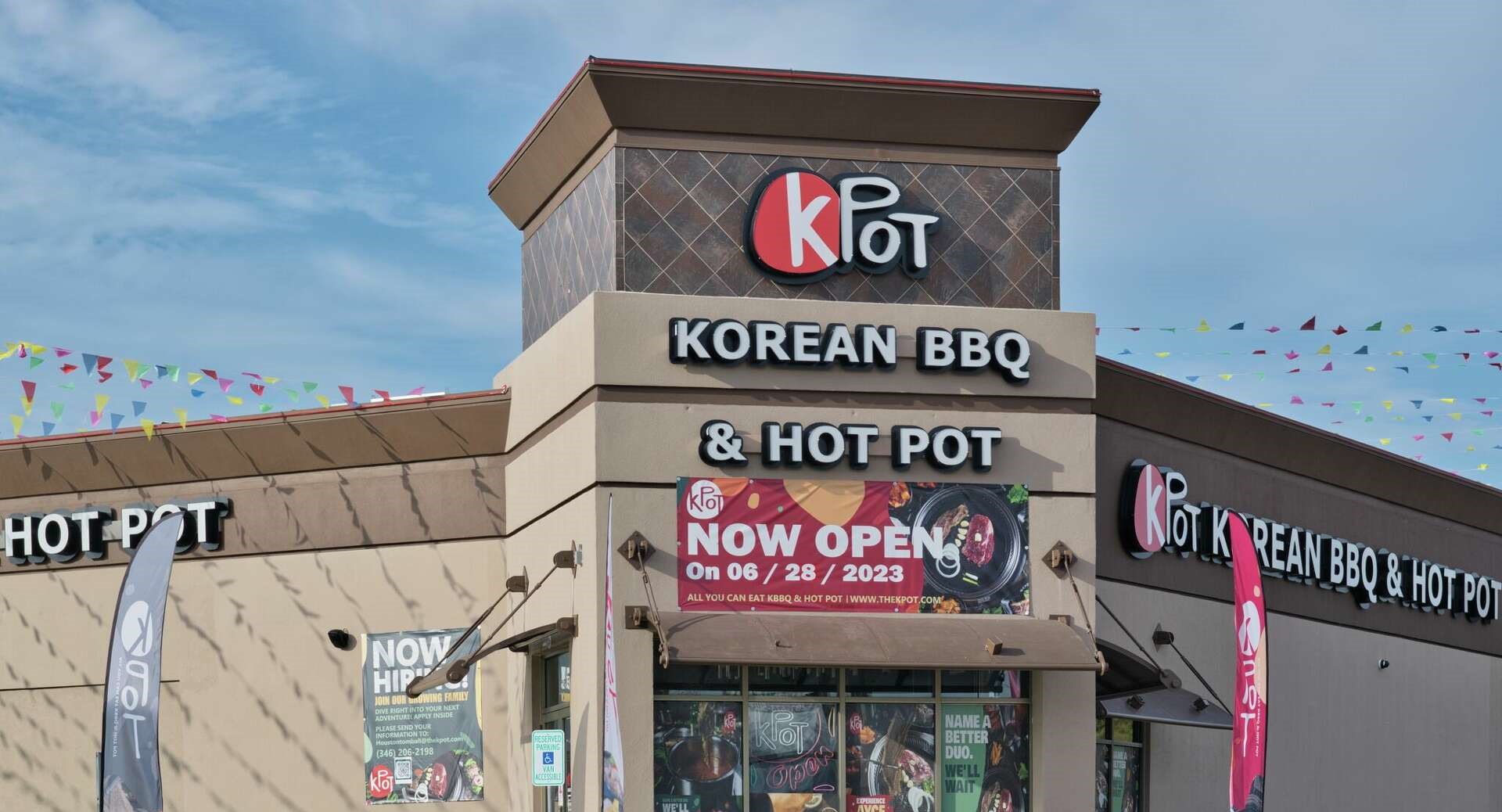
KPOT offers a unique dining experience with Korean BBQ and hot pot, allowing customers to cook their own meals at the table with fresh ingredients and flavorful broths.
KEY FRANCHISE STATS
Franchisees
?
8
+
n.a.
n.a.
Franchise fee
?
$50,000
Investment
?
$426,000 - $1,713,000
Revenue (AUV)
?
Undisclosed
$0
+
n.a.
n.a.
Sign up
KPOT Korean BBQ & Hot Pot is a fast-growing franchise that blends traditional Asian dining with a modern twist. The brand was founded in 2021 and launched its first locations the same year. It is headquartered in Randolph, New Jersey.
KPOT offers a unique, interactive experience by combining Korean barbecue and hot pot dining in a single setting. Guests cook their own meals tableside using a variety of meats, seafood, vegetables, and flavorful broths. This self-service model creates a social and engaging atmosphere for diners.
The company began franchising in 2021 and has quickly expanded across the United States. It operates over 100 locations, including both franchised and corporate-owned units.
KPOT stands out in the casual dining sector with its fusion of bold flavors, energetic ambiance, and contemporary restaurant design. Its focus on guest experience and tech-enabled service helps differentiate it from other Asian dining concepts.
Interested in KPOT franchise?
Share your information and our team will help you explore KPOT franchise opportunity, including startup costs, available territories, ownership requirements, and next steps.
The initial investment required for a KPOT franchise is
$426,000 - $1,713,000.
That is the total cost you would need to finance if you were to start this franchise.
These costs are provided by the franchisor in the Franchise Disclosure Document.
Type of Expenditure
Amount
Initial Franchise Fee
$50,000
Training Fee
$3,000 to $9,000
Website Fee – 3 Months
$750
Rent – 3 Months
$30,000 to $120,000
Lease & Utility Security Deposit
$11,000 to $95,000
Design & Architect Fees
$3,000 to $30,000
Leasehold Improvements
$100,000 to $800,000
Signage
$4,000 to $10,000
Equipment, Furniture and Fixtures
$50,000 to $200,000
Point of Sale & Computer Equipment
$15,000 to $40,000
Security System
$3,500 to $5,000
Business Licenses & Permits (Not Including Liquor License)
$5,000 to $7,500
Professional Fees
$5,000 to $10,000
Insurance – 3 Months
$9,000 to $30,000
Initial Inventory
$20,000 to $50,000
Training Expenses
$15,000 to $20,000
Grand Opening Marketing
$10,000 to $50,000
On-Site Evaluation & Expenses
$1,450 to $5,850
Opening Assistance & Training/Expenses
$15,000 to $30,000
Additional Funds – 3 Months
$75,000 to $150,000
Total
$425,700 to $1,713,100
Create a free account to access this table and more.
Thank you! Your submission has been received!
Oops! Something went wrong while submitting the form.
Type of Expenditure
Amount
Initial Franchise Fee
$50,000
Training Fee
$3,000 to $9,000
Website Fee – 3 Months
$750
Rent – 3 Months
$30,000 to $120,000
Lease & Utility Security Deposit
$11,000 to $95,000
Design & Architect Fees
$3,000 to $30,000
Leasehold Improvements
$100,000 to $800,000
Signage
$4,000 to $10,000
Equipment, Furniture and Fixtures
$50,000 to $200,000
Point of Sale & Computer Equipment
$15,000 to $40,000
Security System
$3,500 to $5,000
Business Licenses & Permits (Not Including Liquor License)
$5,000 to $7,500
Professional Fees
$5,000 to $10,000
Insurance – 3 Months
$9,000 to $30,000
Initial Inventory
$20,000 to $50,000
Training Expenses
$15,000 to $20,000
Grand Opening Marketing
$10,000 to $50,000
On-Site Evaluation & Expenses
$1,450 to $5,850
Opening Assistance & Training/Expenses
$15,000 to $30,000
Additional Funds – 3 Months
$75,000 to $150,000
Total
$425,700 to $1,713,100
Franchise Disclosure Document
Below is KPOT's 2023 Franchise Disclosure Document. Sign up for free to view the document.
Number of units
KPOT had 16 total units in 2023, of which 8 were franchised-owned and 8 company-owned.
KPOT provides an extensive training system for its franchisees, aimed at equipping them with the necessary operational skills and compliance knowledge. This system encompasses both initial and continuing training programs. The key components are as follows:
Initial Training Program: KPOT requires up to three individuals (typically the franchisee, General Manager, and another manager) to complete classroom and on-site training at its designated headquarters or restaurant locations. This must be completed at least 30 days before the restaurant opening and includes various operational topics supported by manuals, videos, and workbooks.
Opening Assistance: The franchisee receives on-site support from a KPOT representative for up to seven days around the opening period. This training covers real-time restaurant operations and setup, with costs borne by the franchisee.
Refresher and Additional Training: KPOT may require or offer optional seminars and refresher programs for franchisees, managers, and staff. Although KPOT generally doesn’t charge for these sessions, franchisees are responsible for travel, lodging, meals, and wages of attendees.
Successor/Replacement Training: If a new General Manager or key personnel are appointed, they must also complete the initial training. KPOT charges an additional training fee and associated expenses for these sessions.
Territory Protection
KPOT provides franchisees with a designated territory, which may vary in size depending on the location—typically a two-block radius in urban settings or a five-mile radius in suburban areas. However, the territory is not exclusive.
KPOT reserves the right to operate or license others to operate at Non-Traditional Sites within the franchisee's designated area, and these locations do not fall under the franchisee’s territorial rights.
Additionally, KPOT and its affiliates retain the right to sell products under its proprietary marks through alternative channels such as grocery stores, internet sales, or licensing deals with third parties.


.png)




.png)