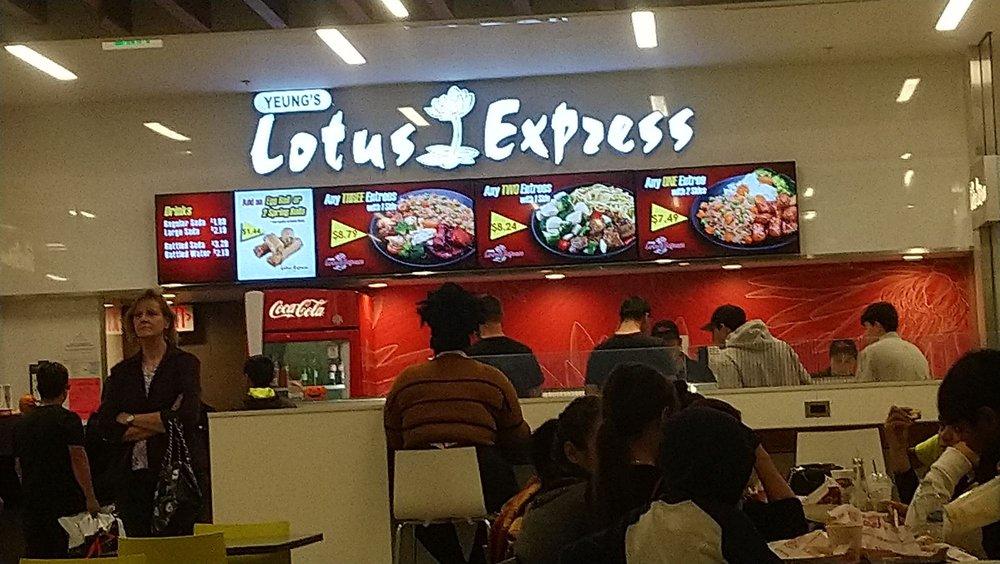
Yeung’s Lotus Express is a quick-service Asian franchise offering Chinese and Pan-Asian cuisine via fast casual outlets, serving lunch and dinner crowds, and known for combining restaurant quality with fast-service convenience. :contentReference[oaicite:1]{index=1}
KEY FRANCHISE STATS
Franchisees
?
12
+
0%
0%
Franchise fee
?
$30,000
Investment
?
$295,000 - $1,404,000
Revenue (AUV)
?
Undisclosed
$0
+
n.a.
n.a.
Sign up
Yeung’s Lotus Express was founded by restaurateur Kelly Yeung and launched its first location in Miami’s Bayside Marketplace in 1987. The brand is part of International Restaurant Management Group (IRMG), which is headquartered in Coral Gables, Florida.
Drawing on IRMG’s extensive experience in the quick-service and food-court industry, Yeung’s Lotus Express quickly established itself as a go-to destination for freshly prepared Chinese cuisine served fast.
The franchise specializes in fast-casual Chinese food, offering customer favorites like Orange Chicken, General Tso’s Chicken, Beef and Broccoli, Chicken and Mushrooms, and Pepper Steak.
Each meal is cooked fresh and served with a variety of side options, allowing customers to customize their combinations. After nearly a decade of refining its operations, Yeung’s Lotus Express began franchising in 2000 to meet strong consumer demand and expand its footprint across the United States.
Interested in Yeung's Lotus Express franchise?
Share your information and our team will help you explore Yeung's Lotus Express franchise opportunity, including startup costs, available territories, ownership requirements, and next steps.
The initial investment required for a Yeung's Lotus Express franchise is
$295,000 - $1,404,000.
That is the total cost you would need to finance if you were to start this franchise.
These costs are provided by the franchisor in the Franchise Disclosure Document.
Yeung’s Lotus Express provides several structured training programs to prepare franchisees for successful restaurant operations. These are outlined as follows:
Initial Training Program Franchisees (or their designated managers) and 1–2 additional team members, including a full-time cook, must complete an initial training program before opening. This program lasts a minimum of 120 hours and includes both 32 hours of classroom study and 88 hours of on-the-job training. Topics covered include food preparation, customer service, management techniques, inventory control, cost accounting, and general business operations. This training is typically held in South Florida. Attendees must sign a Confidentiality, Non-Disclosure and Non-Competition Agreement. All associated costs (travel, lodging, meals, wages) are the responsibility of the franchisee.
Opening On-Site Assistance The franchisor provides opening assistance at the franchise location for up to 6 days—2 days before opening and 4 days after. This support is provided by a franchisor operations manager to ensure correct implementation of procedures.
Territory Protection
Yeung’s Lotus Express offers limited territory protection to its franchisees. During the initial term (and any renewal), the franchisor agrees not to establish or authorize another Wok A Holic/Yeung’s Lotus Express franchise at the exact Franchise Location granted to the franchisee.
However, no exclusive territory or broader area protection is provided under the Franchise Agreement.
This means that while the franchisee’s specific restaurant address is protected from direct duplication, the franchisor reserves the right to open or authorize other units nearby, including company-owned outlets or franchises operated by others. The franchisee may also face competition from other channels controlled by the franchisor or its affiliates.



.png)