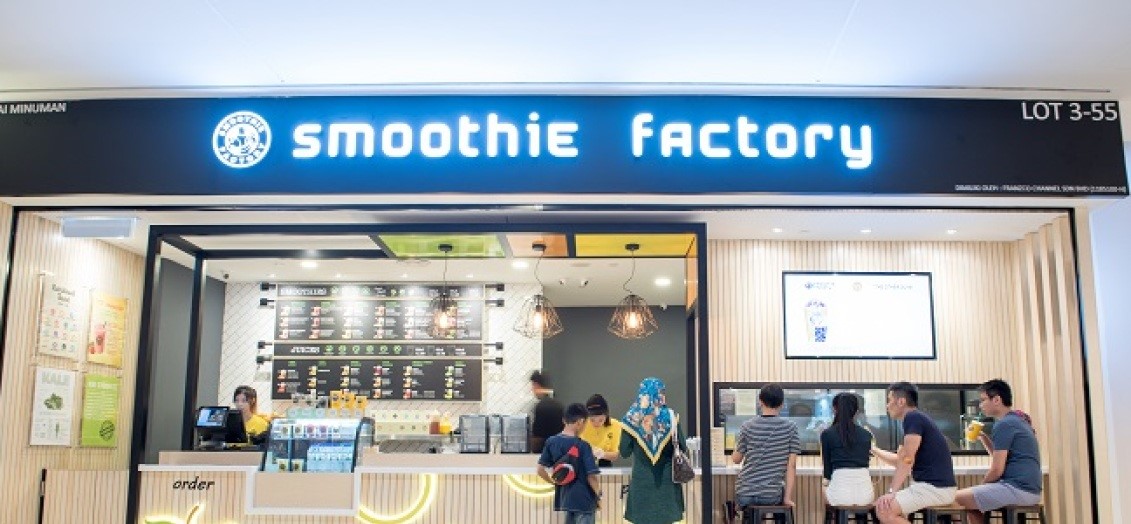
Smoothie and juice bar franchise featuring a menu of freshly blended smoothies, juices, and healthy food options, promoting a nutritious and active lifestyle.
KEY FRANCHISE STATS
Franchisees
?
8
+
-43%
-43%
Franchise fee
?
$30,000
Investment
?
$79,000 - $558,000
Revenue (AUV)
?
Undisclosed
$469,000
+
n.a.
n.a.
Sign up
Smoothie Factory + Kitchen is a health-focused franchise offering a diverse menu of smoothies, juices, and nutritious meals. Founded in 1996 by Olympic athlete James Villasana in Carrollton, Texas, the brand was created to provide quick, healthy food options made with high-quality ingredients.
It is headquartered in Dallas, Texas, and began franchising in 1997. Today, Smoothie Factory + Kitchen operates in over 50 locations worldwide.
The franchise’s menu features real fruit smoothies, cold-pressed juices, superfood bowls, salads, wraps, and other wholesome items. All offerings are made without artificial additives or preservatives. This strong commitment to natural ingredients helps the brand stand out in the competitive health food market.
Smoothie Factory + Kitchen supports various store formats, including traditional storefronts and non-traditional settings such as mall kiosks and airport locations.
Interested in Smoothie Factory + Kitchen franchise?
Share your information and our team will help you explore Smoothie Factory + Kitchen franchise opportunity, including startup costs, available territories, ownership requirements, and next steps.
The initial investment required for a Smoothie Factory + Kitchen franchise is
$79,000 - $558,000.
That is the total cost you would need to finance if you were to start this franchise.
These costs are provided by the franchisor in the Franchise Disclosure Document.
Smoothie Factory + Kitchen provides four eligible single-unit franchise formats: the SF+K Traditional Store, SMOOTHIE FACTORY Non-Traditional Store, SF+K-RED MANGO Co-Branded Traditional Store, and SMOOTHIE FACTORY Non-Traditional Store Co-Branded with a Third-Party Concept.
Store Format
Initial Investment Range
SF+K Traditional Store
$278,500 to $478,500
SMOOTHIE FACTORY Non-Traditional Store
$176,500 to $359,500
SF+K-RED MANGO Co-Branded Traditional Store
$338,000 to $558,000
SMOOTHIE FACTORY Non-Traditional Store Co-Branded with a Third-Party Concept
$78,500 to $179,500
The following table presents the estimated expenditures for an SF+K Traditional Store.
For further details concerning the listed costs, refer to the Franchise Disclosure Document (Item 7).
Type Of Expenditure
Amount
Initial Franchise Fee
$30,000 - $30,000
Lease Deposits & Rent
$4,000 - $9,000
Design and Construction Fee
$0 - $3,000
Architect; Engineer; Drawings
$8,000 - $15,000
Permits
$1,500 - $3,000
Interior Improvements, General Contractor; Electrical; Millwork; Tile, Plumbing, HVAC
$144,000 - $234,000
Signage Package
$7,500 - $12,000
Smallwares; Furniture; Interior Graphics; Fixtures; Digital Menu Boards; Equipment
Create a free account to access this table and more.
Thank you! Your submission has been received!
Oops! Something went wrong while submitting the form.
Smoothie Factory + Kitchen provides four eligible single-unit franchise formats: the SF+K Traditional Store, SMOOTHIE FACTORY Non-Traditional Store, SF+K-RED MANGO Co-Branded Traditional Store, and SMOOTHIE FACTORY Non-Traditional Store Co-Branded with a Third-Party Concept.
Store Format
Initial Investment Range
SF+K Traditional Store
$278,500 to $478,500
SMOOTHIE FACTORY Non-Traditional Store
$176,500 to $359,500
SF+K-RED MANGO Co-Branded Traditional Store
$338,000 to $558,000
SMOOTHIE FACTORY Non-Traditional Store Co-Branded with a Third-Party Concept
$78,500 to $179,500
The following table presents the estimated expenditures for an SF+K Traditional Store.
For further details concerning the listed costs, refer to the Franchise Disclosure Document (Item 7).
Type Of Expenditure
Amount
Initial Franchise Fee
$30,000 - $30,000
Lease Deposits & Rent
$4,000 - $9,000
Design and Construction Fee
$0 - $3,000
Architect; Engineer; Drawings
$8,000 - $15,000
Permits
$1,500 - $3,000
Interior Improvements, General Contractor; Electrical; Millwork; Tile, Plumbing, HVAC
$144,000 - $234,000
Signage Package
$7,500 - $12,000
Smallwares; Furniture; Interior Graphics; Fixtures; Digital Menu Boards; Equipment
Smoothie Factory provides a structured training program for new franchisees designed to prepare them for successfully operating a store. The training includes the following components:
Initial Training Program: For the first store a franchisee opens, Smoothie Factory admits two individuals to attend the initial training. This program equips them with foundational knowledge and operational skills. The training includes all key aspects of store management, and while there is no tuition fee, the franchisee must cover costs for transportation, lodging, meals, and wages for attendees.
On-Site Store Opening Assistance: Smoothie Factory provides an individual for five days of on-site support during the store opening. This guidance ensures that the store launches smoothly and adheres to brand standards. The franchisee must reimburse the company for the staff member’s travel, lodging, and meal expenses.
Optional Additional Store Opening Support: Franchisees can request more support beyond the standard five days. If available, Smoothie Factory will provide this assistance for a per diem fee plus associated travel and lodging costs.
Territory Protection
Smoothie Factory does not provide its franchisees with exclusive territory protection. While the franchise agreement may outline a defined “Site Selection Area” for store development, it does not guarantee exclusive rights to that geographic area.
The franchisor retains the right to establish additional franchises or operate company-owned outlets in proximity to the franchisee's store. Furthermore, even if a territory is specified, Smoothie Factory may still engage in various distribution channels within that area.
These channels could include mobile units, satellite locations, internet sales, or other alternative venues that may compete directly with the franchisee’s business. Therefore, franchisees should not expect complete market exclusivity when entering into an agreement with Smoothie Factory.


.png)