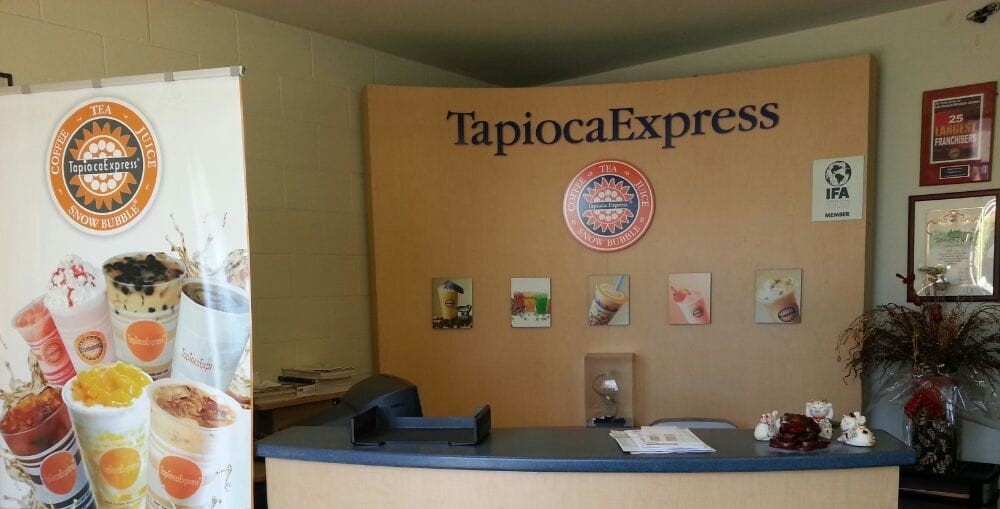

Tapioca Express is a Taiwanese-American fast-casual franchise specializing in bubble tea, coffee, fruit juices, slushes, and light snacks. Founded in 1999 by Wayne and Stephanie in Alhambra, California, the brand was among the first to introduce boba drinks to the U.S. market.
Headquartered in South El Monte, California, Tapioca Express began franchising in 2000 and has since expanded to various states, including California, Washington, Texas, and Virginia.
The franchise offers an extensive menu featuring over 150 items, including flavored teas, milk teas, snow bubbles, icy drinks, juices, flavored milk, tea slushes, tea lemonades, yogurt frosts, coffees, and cheese foam series.
Tapioca Express differentiates itself through its commitment to quality, using top-of-the-line ingredients sourced from Taiwan.
Here's what you would need to invest if you were to start this franchise. These costs are provided by the franchisor in the Franchise Disclosure Document.
Tapioca Express offers 2 types of franchises:
We are summarizing below the main costs associated with opening a Tapioca Express Traditional Café.
For more information on the various types of franchises and its costs, refer to the Franchise Disclosure Document (Item 7).
Tapioca Express offers 2 types of franchises:
We are summarizing below the main costs associated with opening a Tapioca Express Traditional Café.
For more information on the various types of franchises and its costs, refer to the Franchise Disclosure Document (Item 7).
Tapioca Express provides a detailed and structured training program designed to ensure consistent and effective operation of its franchised cafés. The training encompasses both initial and ongoing components to maintain quality and compliance with brand standards.
Tapioca Express provides franchisees with a “Designated Territory,” which is generally a ½ mile radius around the approved Café Location. This area may vary in size depending on geographic and demographic factors, and it can be smaller in non-traditional locations like malls or airports.
While the franchisor commits not to open another Tapioca Express Café in this territory during the agreement term—so long as the franchisee is compliant—this protection is conditional and non-exclusive.
The franchisor retains broad “Reserved Rights,” allowing it to sell products through various channels like online platforms, supermarkets, or alternative trademarks even within the Designated Territory.
Below are some of
Tapioca Express
key competitors in the
Healthy
sector.

17
$15,000
$138,000
$479,000
n.a.
$0
$xxx,xxx
n.a.
n.a.
n.a.
n.a.

Sip Fresh is a beverage franchise offering handcrafted fruit-based juices, teas, and bowls, serving mall shoppers and health-conscious guests, and known for vibrant displays, interactive ordering, and freshly prepared drinks highlighting real fruit, bold flavors, and an engaging in-store experience.
?
?

Bowl Boss Açaí is a health-food-café franchise offering customizable acai bowls, smoothies and wellness snacks, serving health-conscious consumers and casual café guests, and known for premium ingredients, modern décor and strong franchise scalability.
?
?

Tru Bowl Superfood Bar is a health-food café franchise offering açaí bowls, juices and customizable wellness meals, serving health-conscious consumers and casual café guests, and known for modern branding, efficient service and appealing studio-style footprint.
?
?

Sauce on the Side is a fast-casual restaurant franchise offering hand-crafted calzones, salads and desserts, serving diners seeking quality and convenience, and known for fresh dough-made-in-house, strong off-premise sales channels and modern dine-in ambiance.
?
?

Salad House is a health-focused café franchise offering build-your-own salads, wraps and smoothies, serving wellness-oriented diners and families, and known for fresh ingredients, customisation and fast-casual convenience.
?
?
Choosing a franchise goes beyond reviewing fees and financials — it requires an honest assessment of your goals, skills, and risk tolerance. This article outlines the key questions prospective owners should ask before committing. It helps clarify whether the opportunity aligns with your lifestyle, long-term plans, and operational preferences.
Speaking with current and former franchisees is one of the most reliable ways to understand how a franchise really operates. This guide explains how to conduct validation calls, what questions to ask, and how to identify patterns in feedback. It provides a practical framework for uncovering real performance expectations and support quality.
Not all franchise opportunities offer the same potential. This article breaks down how to evaluate a brand’s industry, financial health, support systems, and competitive positioning. It helps prospective buyers compare options and identify franchises with strong long-term viability.
A clear, well-structured business plan is essential for securing financing and preparing for the realities of franchise ownership. This article explains how to build a plan that covers market analysis, operations, staffing, and local marketing. It also outlines how to create realistic pro forma financials, including revenue projections, startup costs, and break-even analysis. Readers gain a practical framework they can use when applying for loans or planning their first years of operations.