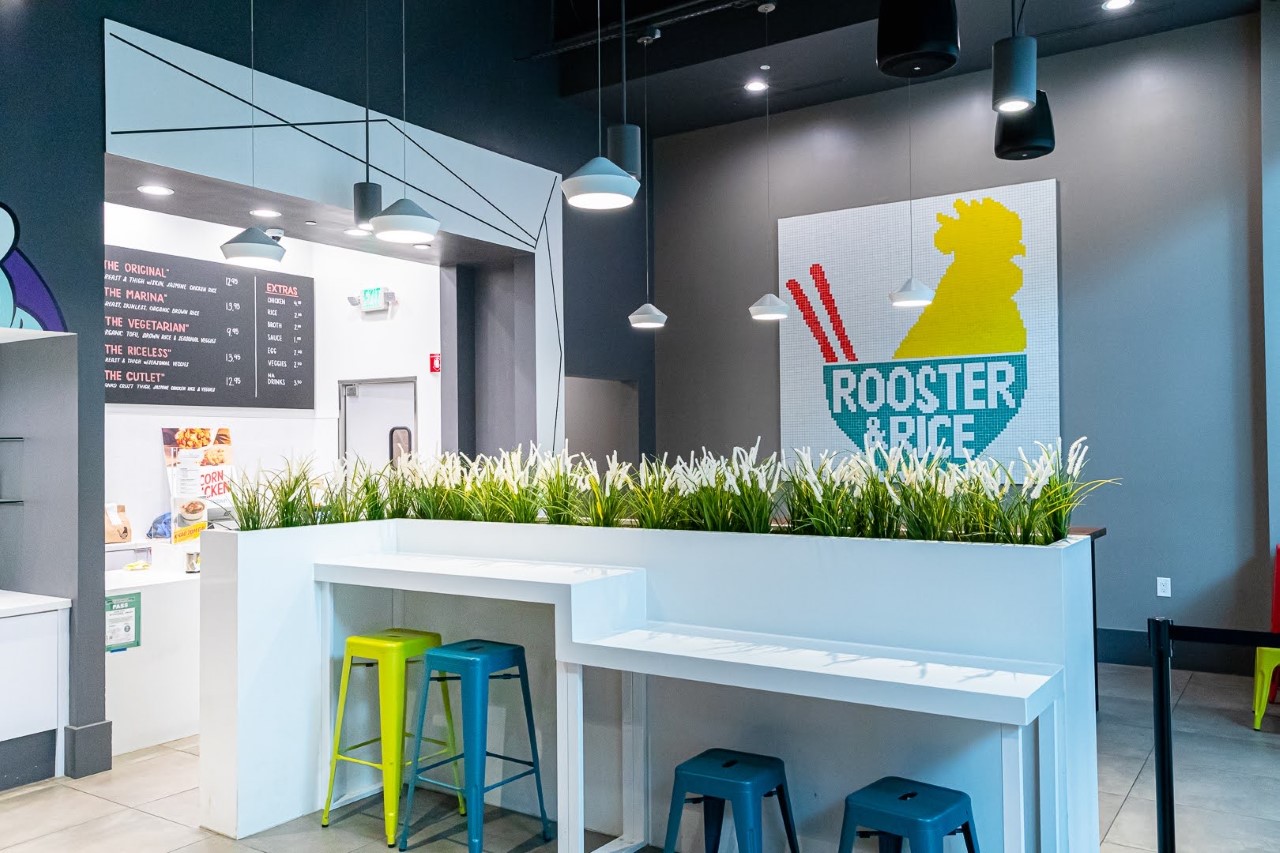
Rooster & Rice is a fast-casual chicken-rice franchise offering Khao Mun Gai and minimalist menu bowls, serving young professionals and casual diners, and known for streamlined operations, high-quality flavor and fast growth across markets.
KEY FRANCHISE STATS
Franchisees
?
1
+
n.a.
n.a.
Franchise fee
?
$35,000
Investment
?
$336,000 - $530,000
Revenue (AUV)
?
Undisclosed
$657,000
+
n.a.
n.a.
Sign up
Rooster & Rice is a fast-casual restaurant franchise founded in 2015 in the San Francisco Bay Area by Bryan Lew and Chef Thomas Charoen. The brand is headquartered in Menlo Park, California. The franchisor, Rooster & Rice Franchise, LLC, began offering franchises in May 2021.
Rooster & Rice serves a focused menu built around the Thai dish khao mun gai, featuring poached chicken, seasoned rice, and a signature sauce. The concept emphasizes simple, clean, and balanced meals presented in a streamlined fast-casual format.
Rooster & Rice differentiates itself through its chef-driven roots, minimalist menu, and efficient operating model designed to lower labor and overhead. Its single-dish strategy creates strong brand identity while allowing consistent quality across locations. This positioning gives the franchise a unique place within the Asian fast-casual market.
Interested in Rooster & Rice franchise?
Share your information and our team will help you explore Rooster & Rice franchise opportunity, including startup costs, available territories, ownership requirements, and next steps.
The initial investment required for a Rooster & Rice franchise is
$336,000 - $530,000.
That is the total cost you would need to finance if you were to start this franchise.
These costs are provided by the franchisor in the Franchise Disclosure Document.
Type of Expenditure
Amount
Initial Franchise Fee
$35,000
Travel and Living Expenses While Training
$3,500 – $5,500
Real Estate Rent, Deposits, and Pre-Paid Expenses (3 months)
$18,000 – $56,000
Furniture, Fixtures, Décor, and Equipment
$42,000 – $65,000
Construction of Leasehold Improvements
$180,000 – $260,000
Inventory and Supplies
$1,350 – $4,000
Opening Inventory
$1,650 – $1,800
Business Licenses and Permits
$1,500 – $4,000
Grand Opening
$2,000 – $10,000
Computer, POS System, and Office Supplies
$3,000 – $4,000
Insurance (3 months)
$600 – $3,000
Architectural Services
$10,000 – $15,000
Professional Services
$3,000 – $5,000
Signage
$4,000 – $12,000
Additional Funds (3 Months)
$30,000 – $50,000
Total Estimated Initial Investment
$335,600 – $530,300
Create a free account to access this table and more.
Thank you! Your submission has been received!
Oops! Something went wrong while submitting the form.
Type of Expenditure
Amount
Initial Franchise Fee
$35,000
Travel and Living Expenses While Training
$3,500 – $5,500
Real Estate Rent, Deposits, and Pre-Paid Expenses (3 months)
$18,000 – $56,000
Furniture, Fixtures, Décor, and Equipment
$42,000 – $65,000
Construction of Leasehold Improvements
$180,000 – $260,000
Inventory and Supplies
$1,350 – $4,000
Opening Inventory
$1,650 – $1,800
Business Licenses and Permits
$1,500 – $4,000
Grand Opening
$2,000 – $10,000
Computer, POS System, and Office Supplies
$3,000 – $4,000
Insurance (3 months)
$600 – $3,000
Architectural Services
$10,000 – $15,000
Professional Services
$3,000 – $5,000
Signage
$4,000 – $12,000
Additional Funds (3 Months)
$30,000 – $50,000
Total Estimated Initial Investment
$335,600 – $530,300
Franchise Disclosure Document
Below is Rooster & Rice's 2024 Franchise Disclosure Document. Sign up for free to view the document.
Number of units
Rooster & Rice had 11 total units in 2024, of which 1 were franchised-owned and 10 company-owned.
Rooster & Rice provides a thorough training program designed to prepare franchisees for successful business operations. The training is structured to cover essential business functions and ensure that the franchisee and key personnel understand the brand’s standards and operational methods. Here are the main components of the training:
Initial Training Program Franchisees must complete a two-week Initial Training Program held at the company’s training facility in Menlo Park, California. The program includes both classroom and hands-on instruction across various operational areas like menu preparation, inventory management, and guest service. Up to two people may attend, and scheduling depends on completing key pre-opening tasks such as site setup and staff hiring.
Training for Replacement Managers and Employees Any new manager or employee must complete training similar to the initial program. This training is arranged on a space-available basis and may not be immediately available. Fees apply, and the franchisee must cover related costs like travel and lodging.
Training for Transferees When a franchise is transferred, the new owner must attend the Initial Training Program. This ensures continuity in operational standards and brand consistency. Like other training programs, the franchisee covers related expenses.
Territory Protection
Rooster & Rice grants franchisees a designated territory for their business operations, known as the “Approved Territory.” Within this area, the franchisor agrees not to license another Rooster & Rice business location, provided the franchisee remains in compliance with their agreement.
However, the territory is not exclusive in the broader sense—franchisees may still face competition from other franchisees, company-owned outlets, or alternate distribution channels controlled by the franchisor.
The franchisor retains the right to sell products online, through mail orders, or other future forms of commerce within the same area. Additionally, they may operate or license other business concepts under different trademarks, even if those concepts offer similar or competing products.



.png)