Dirty Dough Cookies Franchise FDD, Costs & Fees (2026)
Dirty Dough Cookies offers indulgent and decadent cookies with creative flavors and toppings, providing customers with a sweet and satisfying treat.
KEY FRANCHISE STATS
Franchisees
?
13
+
n.a.
n.a.
Franchise fee
?
$49,500
Investment
?
$162,000 - $428,000
Revenue (AUV)
?
Undisclosed
$0
+
n.a.
n.a.
Sign up
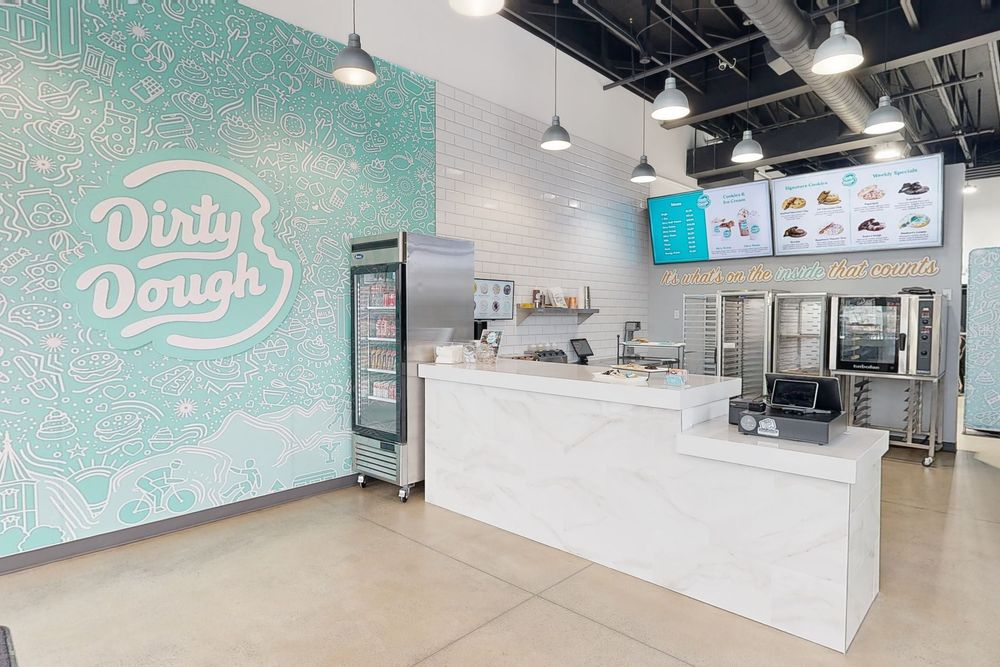
Dirty Dough Cookies is a fast-growing cookie shop franchise founded in Tempe, Arizona in 2018. Built around the motto “it’s what’s on the inside that counts,” the brand specializes in super-stuffed, multi-layered cookies with gooey fillings and unique flavor combinations.
Dirty Dough is now headquartered in Lindon, Utah, and operates under Dirty Dough Franchising LLC, which was officially formed in 2021. The franchise began offering opportunities in 2021 and has rapidly expanded across the U.S.
What sets Dirty Dough apart is its signature product design and bold branding. Instead of traditional cookies, it offers indulgent cookie “bombs” featuring layers, mix-ins, and stuffed centers.
Weekly rotating flavors and a distinctive visual appeal attract loyal fans, while the brand’s tech-forward approach includes a mobile app and digital in-store displays to enhance customer experience.
Interested in Dirty Dough Cookies franchise?
Share your information and our team will help you explore Dirty Dough Cookies franchise opportunity, including startup costs, available territories, ownership requirements, and next steps.
The initial investment required for a Dirty Dough Cookies franchise is
$162,000 - $428,000.
That is the total cost you would need to finance if you were to start this franchise.
These costs are provided by the franchisor in the Franchise Disclosure Document.
Type of Expenditure
Amount
Initial franchise fee
$49,500
Initial training fee
$500
Initial training expenses
$0 – $3,500
Equipment, fixtures and décor
$60,000 – $98,000
POS system, hardware, and software
$1,300 – $3,000
Camera system
$800 – $4,900
Signs
$6,000 – $28,000
Grand opening marketing and promotion
$3,000 – $4,000
Site review fee
$500
Real estate improvements
$25,000 – $150,000
3-Months of lease payments
$2,500 – $21,000
Lease deposit
$1,500 – $8,000
Architectural/Engineering Fees
$4,500 – $14,000
Initial order of cookie dough and toppings
$2,000 – $25,000
Opening inventory
$2,500 – $5,000
Miscellaneous opening costs
$500 – $3,000
Additional funds
$1,500 – $10,000
Total
$161,600 – $427,900
Create a free account to access this table and more.
Thank you! Your submission has been received!
Oops! Something went wrong while submitting the form.
Type of Expenditure
Amount
Initial franchise fee
$49,500
Initial training fee
$500
Initial training expenses
$0 – $3,500
Equipment, fixtures and décor
$60,000 – $98,000
POS system, hardware, and software
$1,300 – $3,000
Camera system
$800 – $4,900
Signs
$6,000 – $28,000
Grand opening marketing and promotion
$3,000 – $4,000
Site review fee
$500
Real estate improvements
$25,000 – $150,000
3-Months of lease payments
$2,500 – $21,000
Lease deposit
$1,500 – $8,000
Architectural/Engineering Fees
$4,500 – $14,000
Initial order of cookie dough and toppings
$2,000 – $25,000
Opening inventory
$2,500 – $5,000
Miscellaneous opening costs
$500 – $3,000
Additional funds
$1,500 – $10,000
Total
$161,600 – $427,900
Franchise Disclosure Document
Below is Dirty Dough Cookies's 2023 Franchise Disclosure Document. Sign up for free to view the document.
Number of units
Dirty Dough Cookies had 13 total units in 2023, of which 13 were franchised-owned and 0 company-owned.
Dirty Dough provides several types of training to its franchisees to ensure operational success and brand consistency. Here is a breakdown of the training programs offered by the franchisor:
Initial Training Program This is mandatory for the Operating Principal and designated managers. It includes both online and in-person sessions held in Utah County, Utah. The program lasts 5 to 6 days depending on prior experience and covers operations, food preparation, marketing, customer service, and more. Successful completion is required before opening the franchise. The franchisor provides manuals and handouts during this training.
Opening Assistance The franchisor assigns a representative to help during the soft opening of the franchise. This can be done in-person or virtually. A fee applies if the session is rescheduled with less than 14 days’ notice.
Initial Refresher Training Conducted six months after opening, this two-day program is mandatory for the Operating Principal and managers. It serves to reinforce and update operational knowledge.
Annual Manager Training At the franchisor's discretion, franchisees may be required to meet annually to review business performance and practices.
Territory Protection
Dirty Dough does not grant exclusive territory rights to its franchisees. Franchisees may face competition from other Dirty Dough outlets, including standard units, mobile trailer units, or company-owned stores.
However, the franchisor commits not to open another traditional franchise or company-owned unit using the same trademark within the franchisee's defined territory. Although traditional units are protected to a degree, mobile trailer units are permitted to operate in a franchisee’s area for special events if they obtain the appropriate permits.
This limited protection ensures some market stability while allowing flexibility for the franchisor to promote the brand. Franchisees should be aware of this operational model when evaluating potential competition within their locality.

.png)

.png)