Tru Bowl Superfood Bar Franchise FDD, Costs & Fees (2026)
Tru Bowl Superfood Bar is a health-food café franchise offering açaí bowls, juices and customizable wellness meals, serving health-conscious consumers and casual café guests, and known for modern branding, efficient service and appealing studio-style footprint.
KEY FRANCHISE STATS
Franchisees
?
13
+
333%
333%
Franchise fee
?
$30,000
Investment
?
$205,000 - $332,000
Revenue (AUV)
?
Undisclosed
$564,000
+
n.a.
n.a.
Sign up
Tru Bowl Superfood Bar is a fast-casual franchise specializing in superfood bowls, smoothies, cold-pressed juices, and healthy snacks. The brand was founded in 2018 in Whittier, California, where it opened its first location and established its headquarters. Tru Bowl began franchising in 2019, expanding its model to entrepreneurs who want to operate a health-focused concept.
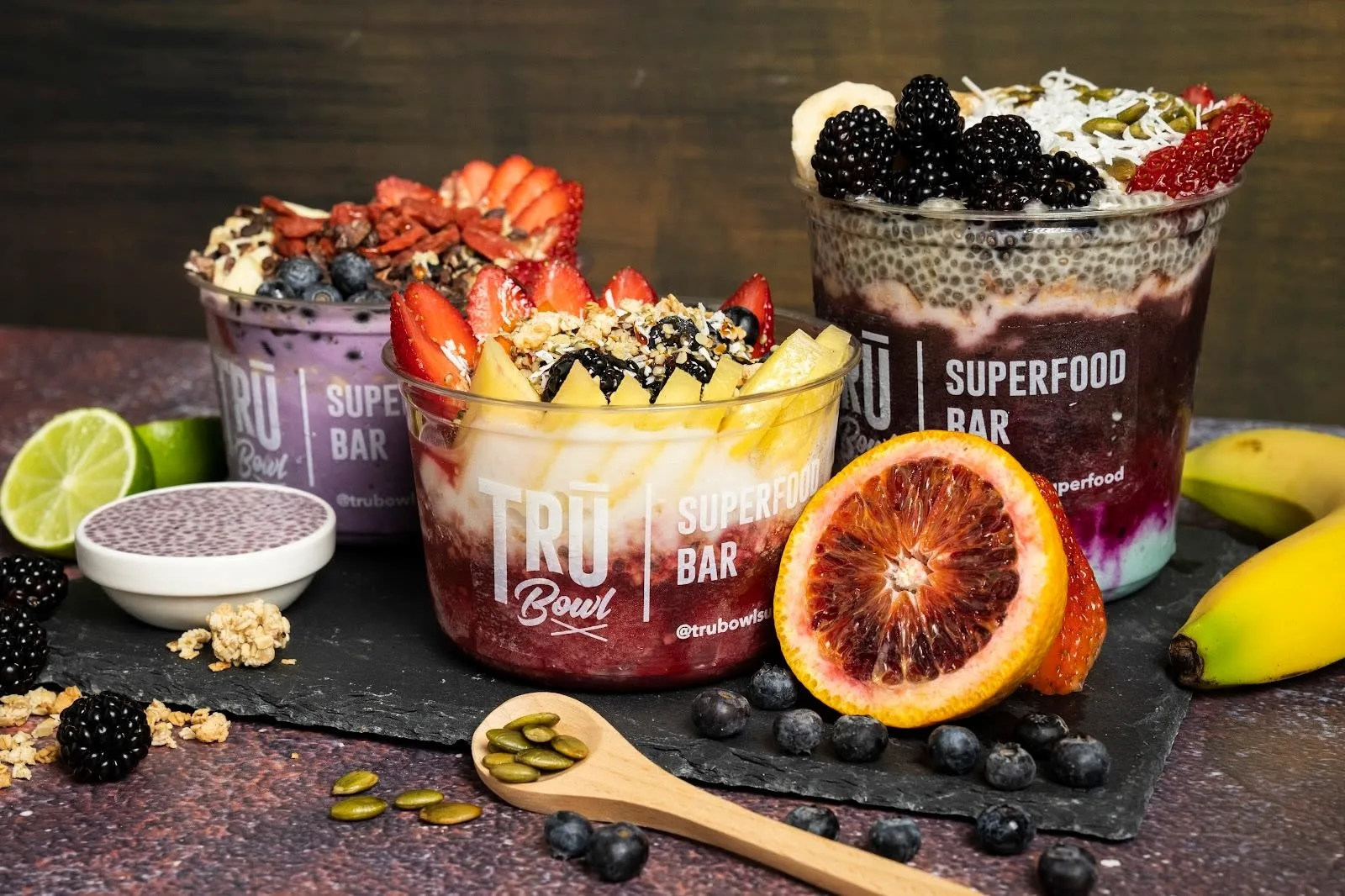
The franchise offers a customizable menu built around clean, nutrient-dense ingredients. Customers can create their own bowls using bases such as açaí, pitaya, chia pudding, and activated coconut blends, then add fresh fruits, nut butters, seeds, and other superfood toppings. This build-your-own approach allows Tru Bowl to stand out in the fast-casual wellness space.
Tru Bowl Superfood Bar differentiates itself through its focus on simplicity, clean eating, and a modern wellness-inspired atmosphere. Its streamlined operations and low-waste model make it a practical option for franchisees while still meeting the growing demand for healthy, quick-service dining.
Interested in Tru Bowl Superfood Bar franchise?
Share your information and our team will help you explore Tru Bowl Superfood Bar franchise opportunity, including startup costs, available territories, ownership requirements, and next steps.
The initial investment required for a Tru Bowl Superfood Bar franchise is
$205,000 - $332,000.
That is the total cost you would need to finance if you were to start this franchise.
These costs are provided by the franchisor in the Franchise Disclosure Document.
Type of Expenditure
Amount
Initial Franchise Fee
$30,000 – $30,000
Travel and Living Expenses While Training
$0 – $2,500
Real Estate Rent Deposits, Utility Deposits, and Pre-Paid Expenses
$15,300 – $21,800
Furniture, Fixtures, and Equipment
$29,400 – $40,520
Leasehold Improvements
$75,000 – $150,000
Inventory and Supplies
$5,000 – $7,000
Business Licenses and Permits
$1,500 – $3,000
Advertising – Grand Opening
$5,000 – $8,000
Insurance (3 months)
$1,200 – $1,500
Architectural/Engineering Fees
$1,500 – $12,500
Subscriptions, Computer and POS System
$1,500 – $1,500
Signage
$8,000 – $10,000
Accountant/Attorney Fees
$1,500 – $3,500
Additional Funds (for three months)
$20,000 – $30,000
Total Estimated Initial Investment
$204,900 – $331,820
Create a free account to access this table and more.
Thank you! Your submission has been received!
Oops! Something went wrong while submitting the form.
Type of Expenditure
Amount
Initial Franchise Fee
$30,000 – $30,000
Travel and Living Expenses While Training
$0 – $2,500
Real Estate Rent Deposits, Utility Deposits, and Pre-Paid Expenses
$15,300 – $21,800
Furniture, Fixtures, and Equipment
$29,400 – $40,520
Leasehold Improvements
$75,000 – $150,000
Inventory and Supplies
$5,000 – $7,000
Business Licenses and Permits
$1,500 – $3,000
Advertising – Grand Opening
$5,000 – $8,000
Insurance (3 months)
$1,200 – $1,500
Architectural/Engineering Fees
$1,500 – $12,500
Subscriptions, Computer and POS System
$1,500 – $1,500
Signage
$8,000 – $10,000
Accountant/Attorney Fees
$1,500 – $3,500
Additional Funds (for three months)
$20,000 – $30,000
Total Estimated Initial Investment
$204,900 – $331,820
Franchise Disclosure Document
Below is Tru Bowl Superfood Bar's 2025 Franchise Disclosure Document. Sign up for free to view the document.
Number of units
Tru Bowl Superfood Bar had 15 total units in 2025, of which 13 were franchised-owned and 2 company-owned.
Tru Bowl Superfood Bar offers a structured training program to prepare franchisees for operating their locations successfully. Training is mandatory for the franchisee and one additional employee, with supplemental and refresher programs available throughout the franchise term. Here's an outline of the training provided:
Initial Training Program Tru Bowl provides a comprehensive initial training course covering operations, sales, marketing, customer service, financial controls, and record-keeping. It must be completed by both the franchisee and a designated employee at least two weeks before the grand opening. Training is conducted at headquarters or another designated location, and while there's no tuition fee, all travel and accommodation expenses are the franchisee’s responsibility.
Opening Assistance Around the launch date, Tru Bowl may send trainers to the franchisee’s location for two days prior and up to three days post-opening. Their role is to assist with hands-on operational guidance and staff familiarization with Tru Bowl’s techniques. Additional opening support can be requested for a fee.
Ongoing Training Tru Bowl may offer or require attendance at ongoing training sessions or seminars. These may occur up to twice per year, not exceeding four days total, and can be held in person or virtually. Franchisees must cover associated costs, including a daily fee per participant and travel expenses.
Territory Protection
Tru Bowl Superfood Bar provides its franchisees with a protected territory that typically includes either a 3- to 4-mile radius or a land area with a population of up to 50,000 people.
During the term of the Franchise Agreement, the franchisor will not open or license another Tru Bowl business within this territory, provided the franchisee remains in good standing. This protection allows franchisees to market and operate without direct overlap from other Tru Bowl outlets.
However, Tru Bowl reserves significant rights that limit the exclusivity. The franchisor may still sell products via online platforms, mobile apps, or other distribution channels across all areas, including inside franchise territories.


.png)