Sauce on the Side Franchise FDD, Costs & Fees (2026)
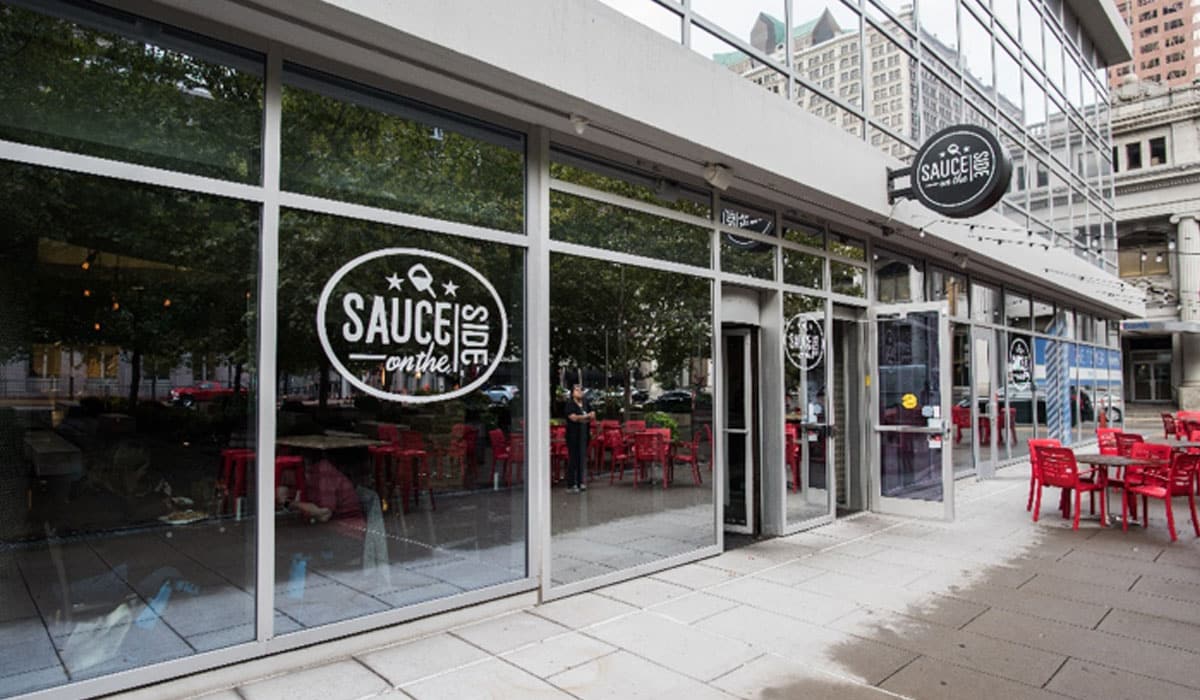
Sauce on the Side is a fast-casual restaurant franchise offering hand-crafted calzones, salads and desserts, serving diners seeking quality and convenience, and known for fresh dough-made-in-house, strong off-premise sales channels and modern dine-in ambiance.
KEY FRANCHISE STATS
Franchisees
?
6
+
0%
0%
Franchise fee
?
$35,000
Investment
?
$494,000 - $794,000
Revenue (AUV)
?
Undisclosed
$946,000
+
n.a.
n.a.
Sign up
Sauce on the Side is a fast-casual restaurant brand founded in 2012 in St. Louis, Missouri. Headquarters remain in St. Louis, and the company launched its franchising program in 2017.
The brand specializes in handcrafted calzones, fresh salads and made-from-scratch sauces and dressings — delivering a quality-driven menu designed for dine-in, take-out and digital ordering.
Sauce on the Side differentiates itself by combining a counter-order format with full-service hospitality: customers enjoy table service once they place their order, and the brand takes pride in sourcing high-quality meats, cheeses and produce while making its dough and sauces in-house.
Unlike many fast-casual chains that emphasize speed alone, Sauce on the Side emphasizes elevated service and menu authenticity. Its operational model is built to perform in off-premise channels — including in-house delivery, third‐party delivery and curbside pickup — which positions the brand for growth in changing consumer habit.
Interested in Sauce on the Side franchise?
Share your information and our team will help you explore Sauce on the Side franchise opportunity, including startup costs, available territories, ownership requirements, and next steps.
The initial investment required for a Sauce on the Side franchise is
$494,000 - $794,000.
That is the total cost you would need to finance if you were to start this franchise.
These costs are provided by the franchisor in the Franchise Disclosure Document.
Sauce on the Side offers a comprehensive training program to prepare franchisees and their team members for operating a franchised restaurant. The training is structured to ensure that the key personnel understand and can execute the brand’s operational and service standards effectively. The following outlines the main training programs provided:
Initial Training Program The Initial Training Program is mandatory for the Principal Owner, Operating Partner, General Manager, and Managers. It is conducted over five weeks, typically at an existing Sauce on the Side location in St. Louis, Missouri. The franchisor does not charge for training up to five people, but franchisees are responsible for all related expenses, such as travel, lodging, and wages.
Pre-Opening In-Restaurant Training If training is completed more than 14 days before opening, key personnel must complete 15 hours of weekly in-restaurant training at an approved Sauce on the Side location until the formal On-Site Opening Assistance begins. This ensures continuity of learning and readiness for the store launch.
On-Site Opening Assistance The franchisor provides five days of On-Site Opening Assistance with 2 to 4 representatives around the scheduled opening. This support covers final preparations and live operational support during the opening phase. Additional on-site help is available upon request, subject to fees.
Training for New Managers If the Operating Partner or General Manager can no longer manage day-to-day operations, their replacement must complete the Initial Training Program within 60 days of designation. This ensures leadership continuity and operational compliance.
Territory Protection
Sauce on the Side provides franchisees with an “Assigned Territory,” typically tailored to the specific demographics of the location and often structured as a two-mile radius.
During the franchise term, and provided the franchisee is not in default, the franchisor agrees not to license or operate another Sauce on the Side restaurant within that territory, except in special “Non-Traditional Locations” like airports or stadiums. This territory must be respected for services like catering and delivery, with permission required to operate beyond it.
However, this territorial protection is not exclusive in the broader sense. Sauce on the Side and its affiliates retain rights to operate or franchise different business concepts or use alternative distribution channels such as grocery stores and the internet—even within the franchisee’s territory.


.png)