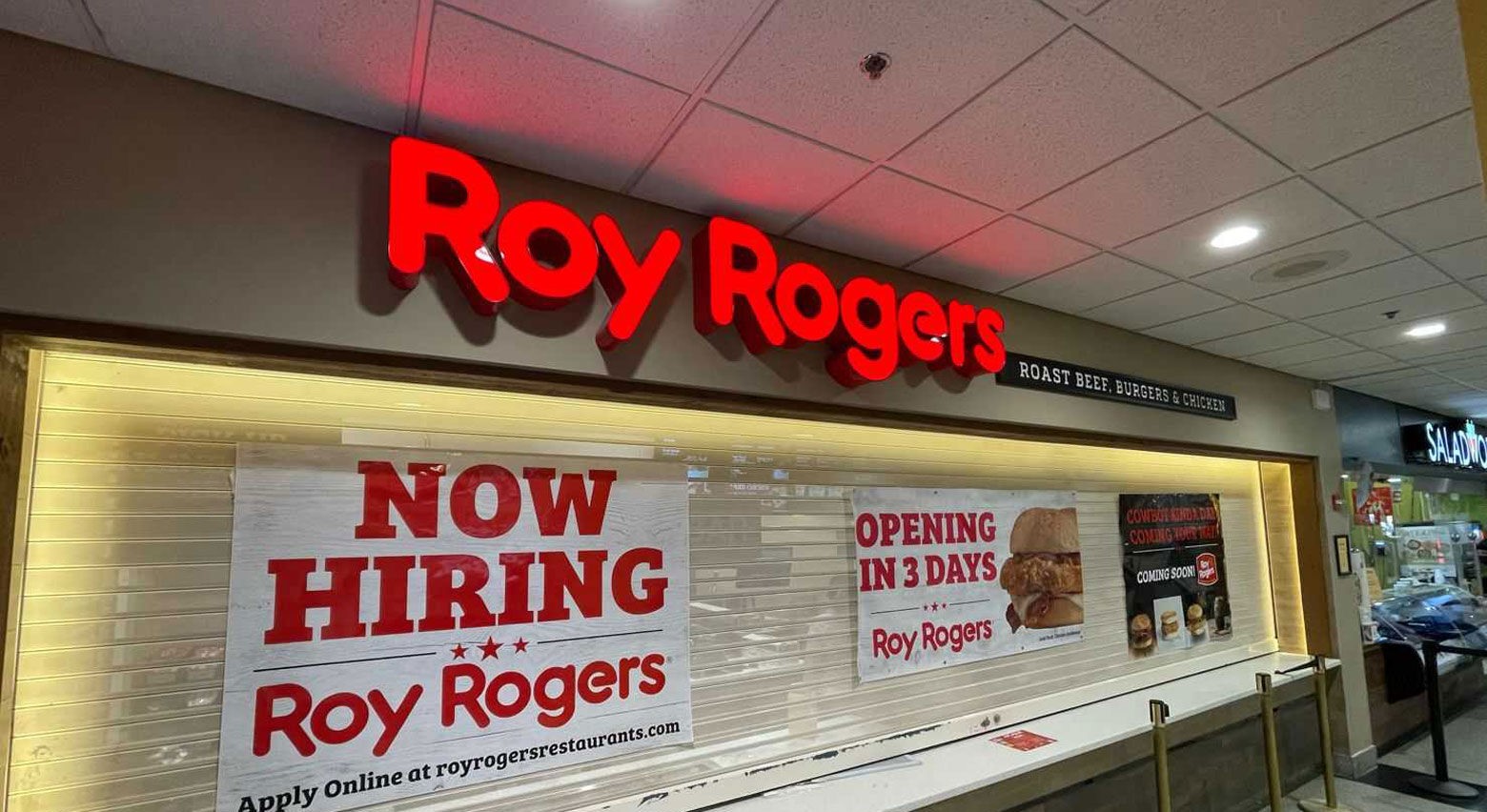

Roy Rogers Restaurants is a classic American quick-service chain known for its "Triple Threat" menu—roast beef sandwiches, fried chicken, and burgers. Founded in 1968 in Falls Church, Virginia, by Marriott Corporation, the brand quickly expanded across the United States.
Today, Roy Rogers is headquartered in Frederick, Maryland, and operates over 40 locations across six states, including Maryland, Virginia, Pennsylvania, New Jersey, and West Virginia.
The franchise began in 1980 when Pete Plamondon Sr., a former Marriott executive, opened the first franchised Roy Rogers in Frederick, Maryland. In 2002, his sons, Pete Jr. and Jim Plamondon, acquired the brand, revitalizing it under Plamondon Companies.
Roy Rogers sets itself apart with its signature Fixin’s Bar, allowing guests to customize their meals with fresh toppings and sauces. The brand's focus on quality, nostalgia, and customer choice has cultivated a loyal customer base.
Here's what you would need to invest if you were to start this franchise. These costs are provided by the franchisor in the Franchise Disclosure Document.
Roy Rogers Restaurants offers 3 types of franchises:
We are summarizing below the main costs associated with opening a Newly Constructed Roy Rogers Restaurant.
For more information on the various types of franchises and its costs, refer to the Franchise Disclosure Document (Item 7).
Roy Rogers Restaurants offers 3 types of franchises:
We are summarizing below the main costs associated with opening a Newly Constructed Roy Rogers Restaurant.
For more information on the various types of franchises and its costs, refer to the Franchise Disclosure Document (Item 7).
Roy Rogers Restaurants provides a detailed and multi-level training program to ensure franchisees and their teams are fully equipped to operate according to brand standards. Here are the key training components:
Roy Rogers Restaurants grants franchisees a defined Territory during the term of their Franchise Agreement, in which the franchisor agrees not to license or establish another Roy Rogers Restaurant. This area is negotiated individually and described using street boundaries, intersections, or political subdivisions.
However, while this may seem like exclusivity, the franchisor retains broad rights that limit the protection significantly.
The franchisor may still establish or license restaurants at Institutional Facilities such as stadiums or airports, even within a franchisee’s Territory. They can also authorize businesses using different trademarks that may offer similar products, both within and outside the designated area.
Below are some of
Roy Rogers Restaurants
key competitors in the
Burger
sector.
16
$30,000
$755,000
$1,581,000
n.a.
$1,746,000
$xxx,xxx
65.4%
n.a.
n.a.
n.a.

Sammy's Sliders is a fast-casual restaurant brand offering gourmet sliders, fries, and shakes, serving burger lovers seeking smaller portions and variety, and known for customizable mini-sandwich combinations, playful branding, and efficient service suited to urban and neighborhood locations.
?
?

Home Frite is a fast-casual franchise offering gourmet fries, burgers, chicken sandwiches and milkshakes, serving urban diners and comfort-food lovers, and known for hand-cut potatoes, signature sauces, and scalable franchise model.
?
?

iniBurger is a burger-restaurant franchise offering gourmet burgers, shakes, and innovative sides, serving millennials and casual diners, and known for bold menu items, modern branding and strong franchisee support.
?
?

Harlem Shake is a burger-and-shake chain franchise offering premium burgers, fries, shakes and craft menu items, serving families and casual diners, and known for nostalgic branding, community vibe, and scalable restaurant prototype.
?
?

Good Stuff Eatery is a fast-casual burger franchise offering handcrafted burgers, crispy fries and shakes, serving casual diners and burger-lovers, and known for chef-driven quality, fun branding and a mission to bring “goodness everywhere”.
?
?
.png)
Built Custom Burgers provides fast-casual, build-your-own burger meals featuring premium ingredients and a streamlined assembly-line format, allowing customers to customize burgers, fries, and shakes for a fresh and satisfying dining experience.
?
?
Choosing a franchise goes beyond reviewing fees and financials — it requires an honest assessment of your goals, skills, and risk tolerance. This article outlines the key questions prospective owners should ask before committing. It helps clarify whether the opportunity aligns with your lifestyle, long-term plans, and operational preferences.
Speaking with current and former franchisees is one of the most reliable ways to understand how a franchise really operates. This guide explains how to conduct validation calls, what questions to ask, and how to identify patterns in feedback. It provides a practical framework for uncovering real performance expectations and support quality.
Not all franchise opportunities offer the same potential. This article breaks down how to evaluate a brand’s industry, financial health, support systems, and competitive positioning. It helps prospective buyers compare options and identify franchises with strong long-term viability.
A clear, well-structured business plan is essential for securing financing and preparing for the realities of franchise ownership. This article explains how to build a plan that covers market analysis, operations, staffing, and local marketing. It also outlines how to create realistic pro forma financials, including revenue projections, startup costs, and break-even analysis. Readers gain a practical framework they can use when applying for loans or planning their first years of operations.