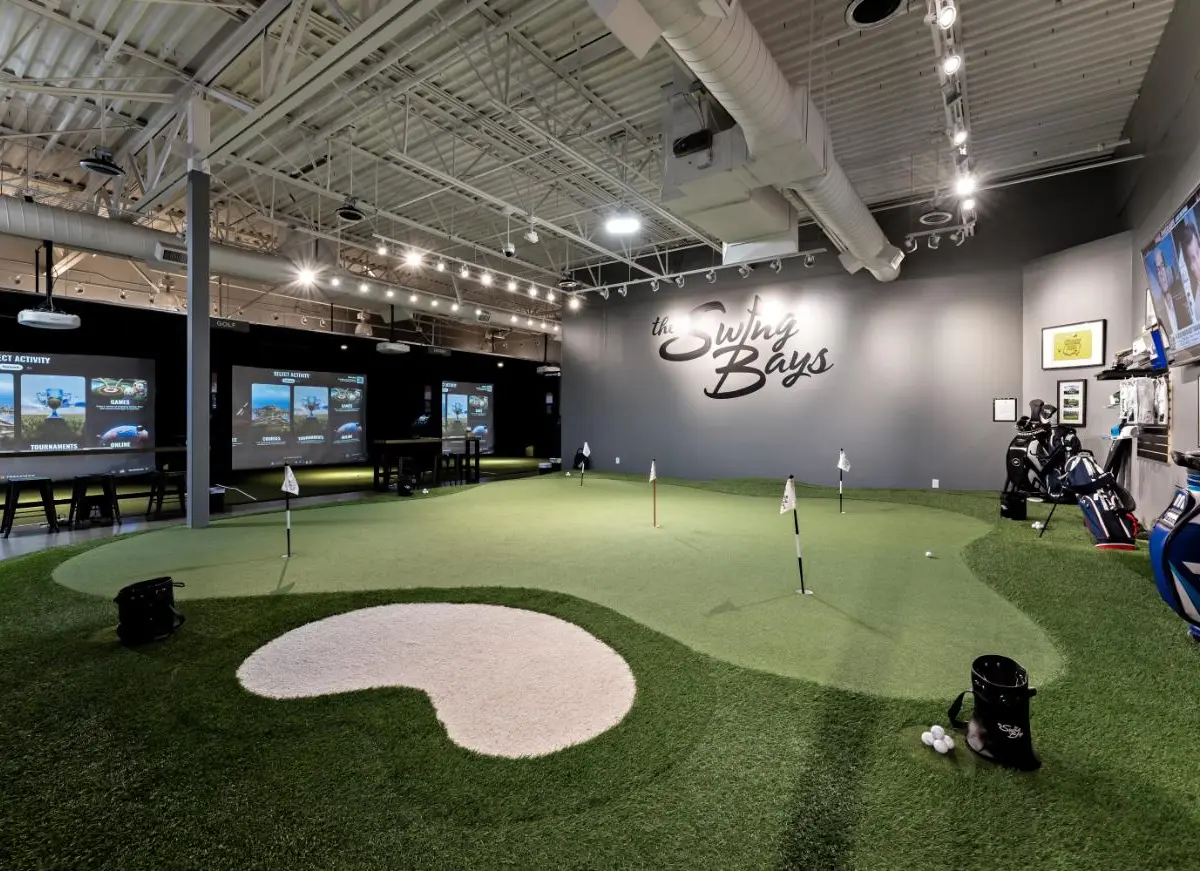
SWING BAYS is a sports-entertainment franchise offering indoor golf simulators, bays, and social lounge services, serving golfers and leisure groups, and known for immersive tech-driven experience, flexible booking and synergistic bar/experience model.
KEY FRANCHISE STATS
Franchisees
?
0
+
n.a.
n.a.
Franchise fee
?
$40,000
Investment
?
$226,000 - $924,000
Revenue (AUV)
?
Undisclosed
$0
+
n.a.
n.a.
Sign up
Swing Bays is an indoor golf improvement concept built around a membership model. Launched in 2022 by PGA professional Dustin Miller and his partner Brenna Miller, the brand was designed to combine advanced simulator technology, professional instruction, golf-specific fitness, and a welcoming social environment in one setting. The business operates from its headquarters in Parker, Colorado.
Franchising began in 2024 as the founders looked to offer their streamlined golf facility model to entrepreneurs interested in the growing indoor golf market.
At its centers, Swing Bays provides access to modern golf simulators, coaching from PGA-certified instructors, TPI-based fitness training, club fitting and repairs, retail merchandise, and a variety of community-building events tailored to golfers at every skill level.
What sets Swing Bays apart from typical simulator lounges or entertainment venues is its focus on structured skill development, dependable membership-driven revenue, and an efficient operating system designed for scalability.
Interested in SWING BAYS franchise?
Share your information and our team will help you explore SWING BAYS franchise opportunity, including startup costs, available territories, ownership requirements, and next steps.
The initial investment required for a SWING BAYS franchise is
$226,000 - $924,000.
That is the total cost you would need to finance if you were to start this franchise.
These costs are provided by the franchisor in the Franchise Disclosure Document.
Type of Expenditure
Amount
Initial Franchise Fee
$40,000 – $40,000
Lease Payments (3 Months)
$12,000 – $54,000
Security Deposits
$4,000 – $17,000
Delayed Opening Fee
$0 – $6,000
Architectural Fees
$5,000 – $20,000
Construction & Leasehold Improvements
$30,000 – $300,000
Furniture & Fixtures
$8,000 – $50,000
Signage
$5,000 – $40,000
Golf Simulators & Golf Equipment
$80,000 – $200,000
Computer System and POS System
$2,000 – $10,000
Business Licenses and Permits
$500 – $4,000
Professional Fees
$1,000 – $5,000
Opening Inventory & Supplies
$2,500 – $25,000
Insurance (3 Months)
$900 – $3,000
GM Certification Fee
$0 – $5,000
Travel & Living Expenses for Training
$500 – $5,000
Grand Opening Advertising
$15,000 – $30,000
Ancillary Real Estate Costs
$0 – $25,000
On-Site Location Evaluation Fee
$0 – $5,000
Additional Funds – 3 Months
$20,000 – $80,000
Total Estimated Initial Investment
$226,400 – $924,000
Create a free account to access this table and more.
Thank you! Your submission has been received!
Oops! Something went wrong while submitting the form.
Type of Expenditure
Amount
Initial Franchise Fee
$40,000 – $40,000
Lease Payments (3 Months)
$12,000 – $54,000
Security Deposits
$4,000 – $17,000
Delayed Opening Fee
$0 – $6,000
Architectural Fees
$5,000 – $20,000
Construction & Leasehold Improvements
$30,000 – $300,000
Furniture & Fixtures
$8,000 – $50,000
Signage
$5,000 – $40,000
Golf Simulators & Golf Equipment
$80,000 – $200,000
Computer System and POS System
$2,000 – $10,000
Business Licenses and Permits
$500 – $4,000
Professional Fees
$1,000 – $5,000
Opening Inventory & Supplies
$2,500 – $25,000
Insurance (3 Months)
$900 – $3,000
GM Certification Fee
$0 – $5,000
Travel & Living Expenses for Training
$500 – $5,000
Grand Opening Advertising
$15,000 – $30,000
Ancillary Real Estate Costs
$0 – $25,000
On-Site Location Evaluation Fee
$0 – $5,000
Additional Funds – 3 Months
$20,000 – $80,000
Total Estimated Initial Investment
$226,400 – $924,000
Franchise Disclosure Document
Below is SWING BAYS's 2024 Franchise Disclosure Document. Sign up for free to view the document.
Number of units
SWING BAYS had 1 total units in 2024, of which 0 were franchised-owned and 1 company-owned.
Swing Bays provides comprehensive training to ensure franchisees and their staff are well-prepared to operate their facilities successfully. The training is detailed, structured, and includes multiple layers of support. Below are the key programs offered by the franchisor:
Initial Training Program Franchisees must complete an initial tuition-free training program held in Parker, Colorado, or another location designated by the franchisor. This training is mandatory for the franchisee, their general manager, and up to two additional employees, and must be completed at least 30 days before opening. The program combines classroom and on-the-job instruction, and failure to complete it may result in a default of the franchise agreement.
Additional and Refresher Training Swing Bays may offer, and at times require, additional or refresher training programs to maintain system standards or adapt to operational changes. These sessions can last up to five days per year and must be attended by the franchisee, general manager, or staff as required. Franchisees bear all costs related to travel, lodging, meals, and salaries during these training sessions.
Remedial and Replacement Training If any trainee does not meet performance standards during the initial training, they may be required to retake the course or be replaced by a new employee. Remedial training is charged at $500 per trainer, per day, plus expenses. All related training materials remain the property of Swing Bays and must be used exclusively for internal training purposes.
Territory Protection
Swing Bays grants franchisees a defined “Protected Territory” surrounding their approved facility location. In urban areas, this is typically a 0.25-mile radius, and in suburban or rural areas, it may extend up to two miles.
During the term of the franchise agreement, and while in compliance, the franchisor will not establish or license another facility using the same system and marks within this territory.
However, the protection is not exclusive in the broader sense. Swing Bays reserves the right to operate under different trademarks, use alternative distribution channels such as the internet, or establish locations at non-traditional sites like stadiums or airports within the same territory.

.png)