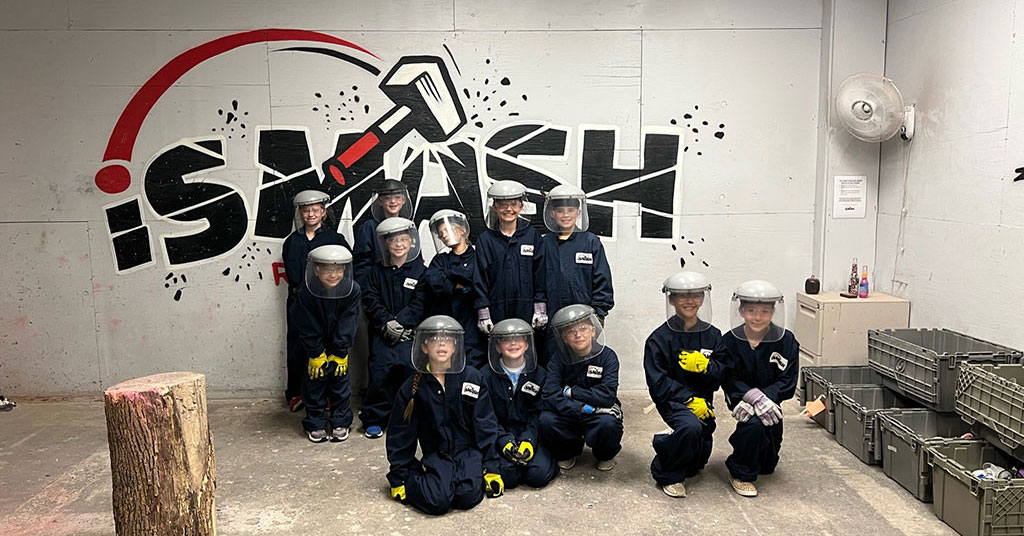
iSmash provides a unique entertainment experience where customers can safely smash household items using baseball bats, crowbars, and sledgehammers. Optional services like splatter paint and axe throwing add extra fun.
KEY FRANCHISE STATS
Franchisees
?
5
+
n.a.
n.a.
Franchise fee
?
$54,950
Investment
?
$278,000 - $754,000
Revenue (AUV)
?
Undisclosed
$769,000
+
n.a.
n.a.
Sign up
iSmashfranchise is a fast-growing experiential entertainment brand founded in 2018 in Rochester, New York. It launched its first location in October 2018 and began franchising in late 2021, opening its first franchise in Tampa, Florida in June 2022.
The company is headquartered in Rochester, NY, and since franchising, it has added multiple new locations across the U.S.
iSmash offers high-energy entertainment through smash rooms, black-light splatter painting, and axe throwing. As the first and only rage-room franchise in America, iSmash provides multiple revenue streams under one roof.
The brand appeals to families, corporate teams, and thrill-seekers, tapping into the growing demand for location-based entertainment. iSmash sets itself apart from competitors by combining physical activity, creativity, and emotional release in a clean, safe, and high-energy environment.
Interested in iSmash franchise?
Share your information and our team will help you explore iSmash franchise opportunity, including startup costs, available territories, ownership requirements, and next steps.
The initial investment required for a iSmash franchise is
$278,000 - $754,000.
That is the total cost you would need to finance if you were to start this franchise.
These costs are provided by the franchisor in the Franchise Disclosure Document.
Type of Expenditure
Amount
Initial Franchise Fee
$54,950
Construction and Leasehold Improvements
$110,360 – $415,255
Lease Deposits – Three Months
$6,500 – $52,500
Furniture, Fixtures and Equipment
$41,608 – $67,908
Signage
$17,000 – $40,000
Computer, Software and POS System
$4,425 – $5,635
Grand Opening Marketing
$2,500 – $10,000
Opening Inventory Package
$2,500 – $10,000
Utility Deposits
$250 – $1,000
Insurance Deposits – Three Months
$1,500 – $6,500
Professional Fees
$20,000 – $35,000
Licenses and Permits
$1,000 – $5,000
Additional Funds – Three Months
$15,000 – $50,000
Total Estimate
$277,593 – $753,748
Create a free account to access this table and more.
Thank you! Your submission has been received!
Oops! Something went wrong while submitting the form.
Type of Expenditure
Amount
Initial Franchise Fee
$54,950
Construction and Leasehold Improvements
$110,360 – $415,255
Lease Deposits – Three Months
$6,500 – $52,500
Furniture, Fixtures and Equipment
$41,608 – $67,908
Signage
$17,000 – $40,000
Computer, Software and POS System
$4,425 – $5,635
Grand Opening Marketing
$2,500 – $10,000
Opening Inventory Package
$2,500 – $10,000
Utility Deposits
$250 – $1,000
Insurance Deposits – Three Months
$1,500 – $6,500
Professional Fees
$20,000 – $35,000
Licenses and Permits
$1,000 – $5,000
Additional Funds – Three Months
$15,000 – $50,000
Total Estimate
$277,593 – $753,748
Franchise Disclosure Document
Below is iSmash's 2025 Franchise Disclosure Document. Sign up for free to view the document.
Number of units
iSmash had 7 total units in 2025, of which 5 were franchised-owned and 2 company-owned.
iSmash provides a structured pre-opening training program to prepare franchisees for operating their Centers in compliance with the franchise system. This training must be completed before the franchisee can open their Center. While iSmash does not charge a fee for this training, franchisees are responsible for covering their own travel and lodging expenses.
Pre-Opening Training Program: This core training is mandatory and is conducted prior to the opening of the franchisee's Center. It focuses on essential operational procedures, business practices, and the proper use of iSmash’s systems and tools.
Travel for Training: Although the training itself is free of charge, franchisees are required to fund their own travel and accommodation to attend. This includes estimated costs necessary to attend the program at the designated location.
Territory Protection
iSmash offers its franchisees a Designated Territory once a Center location is selected and approved by the franchisor. This territory is formally defined in the Franchise Agreement and documented in Schedule 1, providing geographic boundaries or a description unique to each Center.
However, the assignment of this territory is conditional upon the franchisee maintaining compliance with iSmash’s operational standards. The franchisor retains substantial control over territory-related matters, including the right to approve or disapprove proposed Center locations.
While iSmash outlines the Designated Territory in the agreement, it does not imply full exclusivity, as the franchisor may operate other channels of business that could indirectly overlap. Therefore, although franchisees receive a defined operational area, protection from competition within that territory is limited.


.png)