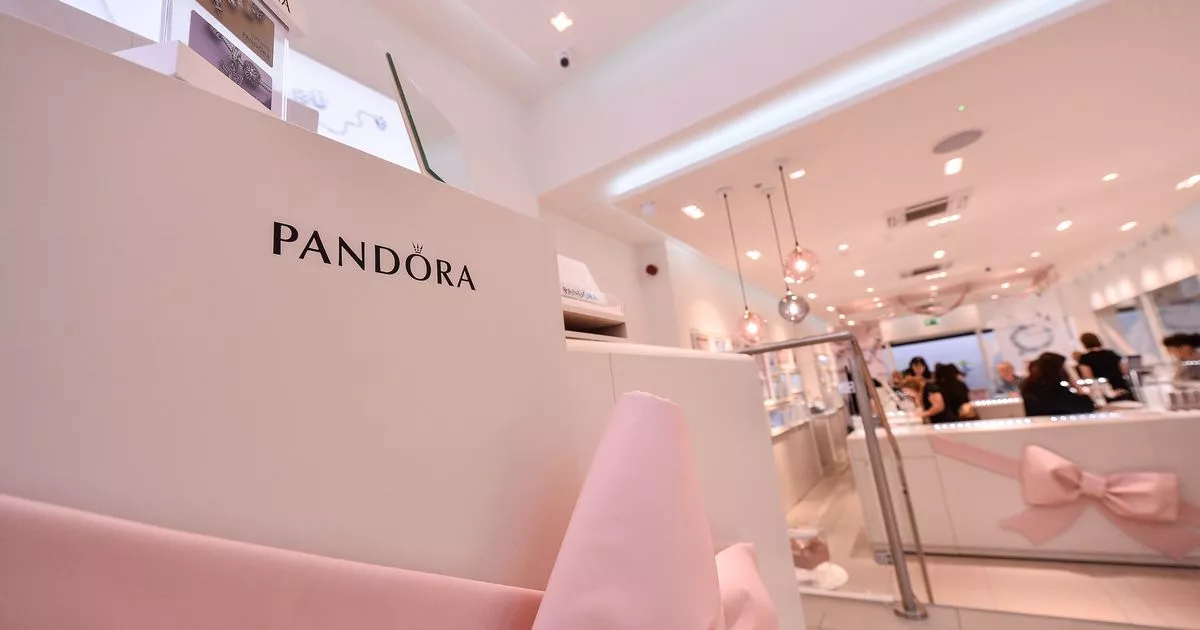
Pandora is a Danish jewelry brand that began in 1982, founded by Per and Winnie Enevoldsen in Copenhagen. Originally a small family-run shop, it quickly evolved into a global brand when it began producing its own designs in Thailand in 1989.
The company is still headquartered in Copenhagen, Denmark, and has grown into one of the world’s most recognized names in affordable luxury jewelry.
Pandora started franchising in 2010 through Pandora Franchising LLC. Its franchise model was created to support rapid global growth, with locations opening across North America, Europe, and Asia. The brand sells a wide variety of jewelry, including charm bracelets, rings, earrings, necklaces, and lab-grown diamond collections.
Pandora is best known for its customizable charm bracelets, which allow customers to create personalized designs. Its products are sold at accessible price points, making luxury-style jewelry available to a mass market. Pandora sets itself apart with a strong global brand identity, consistent store designs, and a patented charm bracelet system.
Here's what you would need to invest if you were to start this franchise. These costs are provided by the franchisor in the Franchise Disclosure Document.
Pandora provides a comprehensive training program for its franchisees designed to support excellence in customer experience and operational success. The training must be completed before store opening and includes both online and in-person elements through its learning management system. There is no fee for initial participation by franchisee staff, although fees may apply for certain managers or follow-up sessions.
Pandora provides limited territory protection to its franchisees. If a Pandora Store is located within a mall, the franchisor agrees not to open or authorize another franchised Pandora Store in the same mall.
However, if the store is outside a mall, the franchisee does not receive any exclusive or protected territory, and the franchisor retains the right to establish new locations at its discretion.
Moreover, Pandora franchisees are not granted rights of first refusal or any options to acquire additional territories. They are also prohibited from independently marketing online or restricting the franchisor’s development activities in adjacent areas.
Below are some of
Pandora
key competitors in the
Fashion
sector.

150
n.a.
$1,330,000
$2,116,000
n.a.
$0
$xxx,xxx
n.a.
n.a.
n.a.
n.a.

SEASON 2 is a retail consignment franchise offering authenticated pre-owned luxury handbags, shoes, and accessories, serving fashion-conscious shoppers and resale entrepreneurs, and known for curated boutiques, sustainability-focused resale, and support for franchisees entering the upscale consignment market.
?
?

The Closet Trading Company is a resale boutique franchise offering consigned contemporary and luxury fashion, serving style-conscious, value- and sustainability-minded shoppers, and known for curated designer inventory, elevated boutique atmospheres, and promoting sustainable fashion through high-end secondhand clothing and accessories.
?
?

Monkee's is a women's boutique retail franchise offering curated apparel, shoes, and accessories, serving fashion-forward shoppers in upscale neighborhoods, and known for its small-store feel, personalized service, and locally owned boutiques supported by a broader Southern-inspired brand.
?
?

Blue Collar Workwear is a retail-franchise offering work clothing, footwear and accessories for blue-collar professions, serving tradespeople and work-wear shoppers, and known for private-label merchandise, rugged brand identity and annual unit revenues around $1.1 million.
?
?

Indy Clover is a boutique fashion franchise offering women’s apparel, accessories, and gift items, serving style-conscious shoppers, and known for curated collections, seasonal drops, and boutique shopping experience.
?
?
.png)
Pearce Bespoke offers custom clothing services, providing personalized tailoring for clients. Franchisees are supported with marketing, training, and operational tools to grow their custom apparel business.
?
?
Choosing a franchise goes beyond reviewing fees and financials — it requires an honest assessment of your goals, skills, and risk tolerance. This article outlines the key questions prospective owners should ask before committing. It helps clarify whether the opportunity aligns with your lifestyle, long-term plans, and operational preferences.
Speaking with current and former franchisees is one of the most reliable ways to understand how a franchise really operates. This guide explains how to conduct validation calls, what questions to ask, and how to identify patterns in feedback. It provides a practical framework for uncovering real performance expectations and support quality.
Not all franchise opportunities offer the same potential. This article breaks down how to evaluate a brand’s industry, financial health, support systems, and competitive positioning. It helps prospective buyers compare options and identify franchises with strong long-term viability.
A clear, well-structured business plan is essential for securing financing and preparing for the realities of franchise ownership. This article explains how to build a plan that covers market analysis, operations, staffing, and local marketing. It also outlines how to create realistic pro forma financials, including revenue projections, startup costs, and break-even analysis. Readers gain a practical framework they can use when applying for loans or planning their first years of operations.