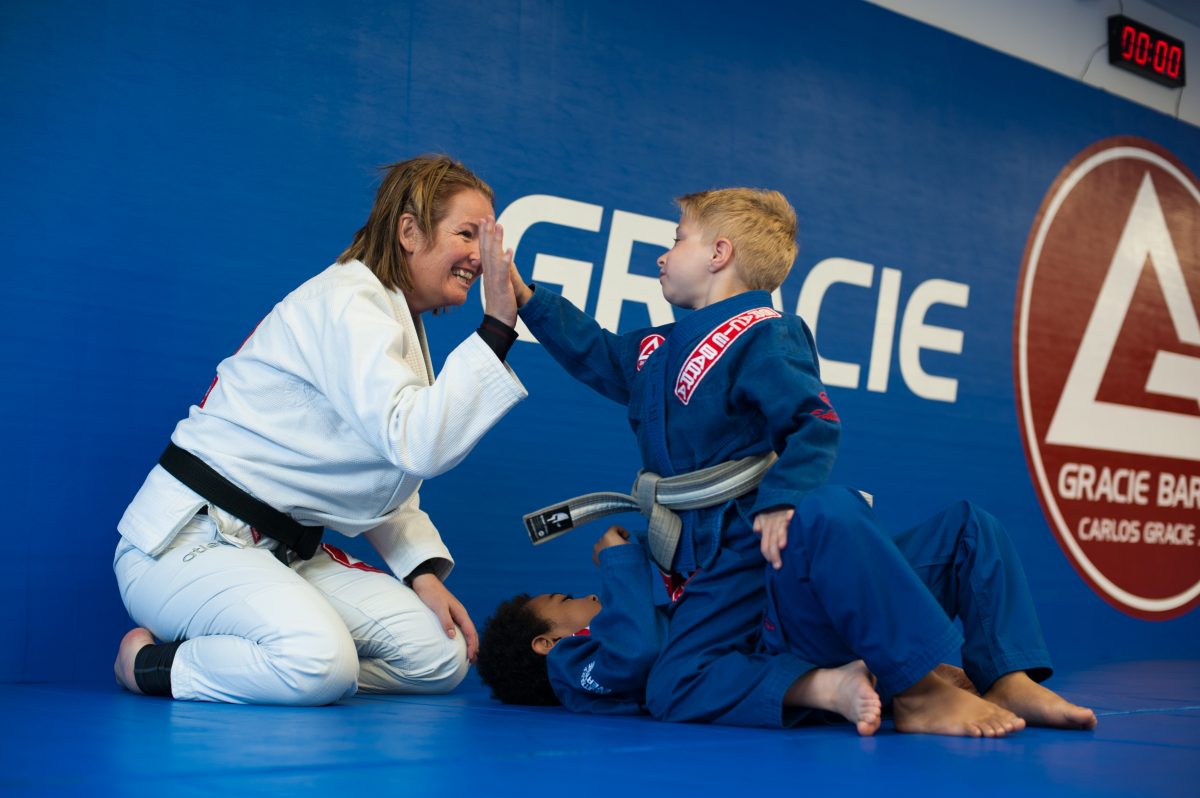
Gracie Barra is a martial-arts franchise offering Brazilian jiu-jitsu classes and self-defense training for kids and adults, serving all-age students, and known for uniform curriculum, global network, and values-based training environment.
KEY FRANCHISE STATS
Franchisees
?
353
+
23%
23%
Franchise fee
?
$10,000
Investment
?
$76,000 - $234,000
Revenue (AUV)
?
Undisclosed
$0
+
n.a.
n.a.
Sign up
Gracie Barra is an international Brazilian Jiu-Jitsu organization that traces its roots back to 1986, when Master Carlos Gracie Jr. opened the first academy in Rio de Janeiro.
Built around the values of discipline, physical fitness, and community, the company has grown into a worldwide network of professional martial arts schools. Today, its headquarters are based in Irvine, California, and the franchise began its global expansion in 2010.
The franchise provides a wide range of structured BJJ classes designed for children, teens, and adults. Students can train in beginner fundamentals, advanced techniques, competition-focused sessions, and practical self-defense. Every program emphasizes safe instruction, technical development, and individual progress.
What sets Gracie Barra apart is its standardized approach to teaching. All locations follow the same curriculum and rely on certified instructors to deliver training. This model ensures uniform quality, consistent student experience, and a cohesive brand presence around the world.
Interested in Gracie Barra franchise?
Share your information and our team will help you explore Gracie Barra franchise opportunity, including startup costs, available territories, ownership requirements, and next steps.
The initial investment required for a Gracie Barra franchise is
$76,000 - $234,000.
That is the total cost you would need to finance if you were to start this franchise.
These costs are provided by the franchisor in the Franchise Disclosure Document.
Type of Expenditure
Amount
Franchise Fee
$10,000
Uniform Expenses
$8,000 – $20,000
Initial Training Expenses
$0
Leasehold Improvements
$10,000 – $40,000
Rent
$18,000 – $60,000
Computer Equipment and Software
$2,000 – $4,000
School Furnishings, Fixtures and Equipment
$10,000 – $40,000
Licenses and Deposits
$3,000 – $20,000
Insurance
$1,000 – $2,000
Supplies
$1,000 – $2,000
Additional Funds (3 months)
$10,000 – $30,000
Total Estimated Initial Investment
$76,000 – $233,500
Create a free account to access this table and more.
Thank you! Your submission has been received!
Oops! Something went wrong while submitting the form.
Type of Expenditure
Amount
Franchise Fee
$10,000
Uniform Expenses
$8,000 – $20,000
Initial Training Expenses
$0
Leasehold Improvements
$10,000 – $40,000
Rent
$18,000 – $60,000
Computer Equipment and Software
$2,000 – $4,000
School Furnishings, Fixtures and Equipment
$10,000 – $40,000
Licenses and Deposits
$3,000 – $20,000
Insurance
$1,000 – $2,000
Supplies
$1,000 – $2,000
Additional Funds (3 months)
$10,000 – $30,000
Total Estimated Initial Investment
$76,000 – $233,500
Franchise Disclosure Document
Below is Gracie Barra's 2025 Franchise Disclosure Document. Sign up for free to view the document.
Number of units
Gracie Barra had 367 total units in 2025, of which 353 were franchised-owned and 14 company-owned.
The Gracie Barra franchise provides a structured set of training programs and certifications for franchisees and their staff to maintain consistent operational and instructional standards across its schools. The training offerings include:
Initial Training Program: This is a web-based training lasting approximately 30 hours. It is mandatory for the Program Director and Head Instructor of the school to complete this training. The Franchisor may waive participation requirements if sufficient prior experience is demonstrated.
Instructor Certificate Program: In addition to the initial training, the Head Instructor must also complete a minimum of 10 hours of certification training. This certification is required to supervise all martial arts instruction and must be renewed annually.
Ongoing Web-Based Training: The Franchisor offers periodic online sessions such as webinars, video conferences, and other remote learning modules. These are limited to no more than 12 sessions per three-month period and may involve a fee.
Continuing Education and Development: Franchisees may be invited to participate in seminars, conventions, technical development programs, or martial arts tournaments. While not mandatory, these sessions are intended to support professional development.
Employee Training Standards: Franchisees are responsible for training all employees per Franchisor standards. Employees may also be required to participate in online training or certification programs offered by the Franchisor or third parties.
Territory Protection
Gracie Barra grants its franchisees a defined geographic area, referred to as the “Territory,” in which they are authorized to operate their school.
Within this Territory, the franchisor agrees not to establish or authorize another Gracie Barra school, provided the franchisee meets certain performance benchmarks such as the required sales threshold.
However, this grant does not confer exclusive or perpetual rights to the Territory, and the franchisor retains substantial flexibility in its operations. Despite the initial assignment of a Territory, the franchise agreement makes clear that the rights are non-exclusive.




.png)