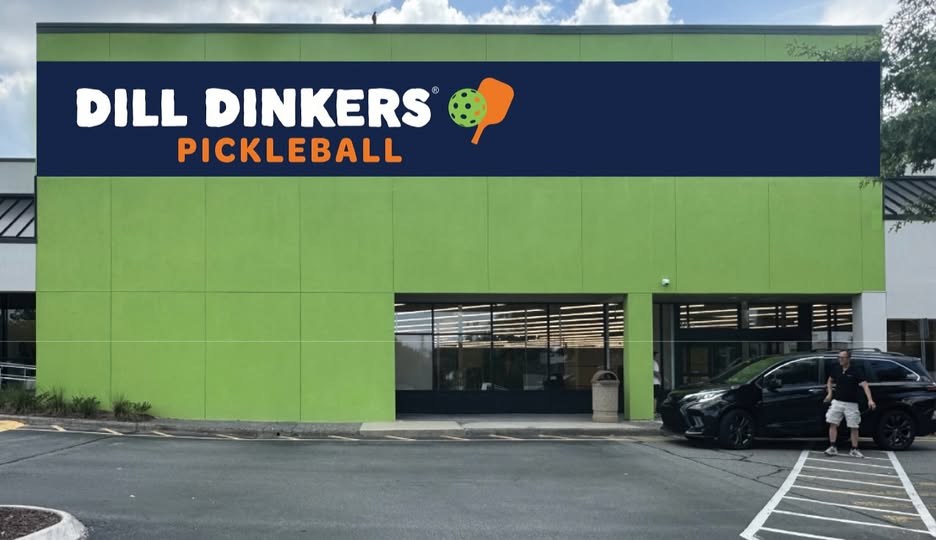
Dill Dinkers is a sports-club franchise offering indoor pickleball clubs with memberships, court rentals, lessons, leagues and events, serving active adults and social players, and known for turnkey venue design, nine revenue streams, and exponential growth.
KEY FRANCHISE STATS
Franchisees
?
0
+
n.a.
n.a.
Franchise fee
?
$50,000
Investment
?
$426,000 - $923,000
Revenue (AUV)
?
Undisclosed
$0
+
n.a.
n.a.
Sign up
Dill Dinkers is an emerging indoor pickleball club franchise that began in 2022, created by founders Will and Denise Richards. The idea took shape in Columbia, Maryland, where the couple noticed that players lacked access to dedicated, high-quality indoor facilities that could support play throughout the year.
The business is still based in Columbia, Maryland, and its model centers on building purpose-designed venues exclusively for pickleball. Typical locations include several permanent courts, training equipment such as ball machines, programming like leagues and clinics, private and group lessons, a retail pro shop, event areas, and a proprietary reservation and operations system managed through the Dill Dinkers mobile app.
The franchise opportunity rolled out in September 2023, and the brand has since experienced fast nationwide growth, with many clubs already open and hundreds more moving through the development pipeline.
What sets Dill Dinkers apart is its commitment to constructing pickleball-specific environments rather than adapting tennis courts or general athletic spaces. The franchise emphasizes a welcoming, community-oriented atmosphere designed for players of every age and skill level.
Interested in Dill Dinkers franchise?
Share your information and our team will help you explore Dill Dinkers franchise opportunity, including startup costs, available territories, ownership requirements, and next steps.
The initial investment required for a Dill Dinkers franchise is
$426,000 - $923,000.
That is the total cost you would need to finance if you were to start this franchise.
These costs are provided by the franchisor in the Franchise Disclosure Document.
Type of Expenditure
Amount
Initial Franchise Fee
$50,000
Site Review
$0 – $1,500
Training Fee & Expenses
$7,500 – $9,000
Architectural, Engineer, and Legal Counsel
$5,000 – $40,000
Audio Visual Security & Smart Court System
$54,107 – $110,375
Leasehold Improvements and Construction Costs
$139,535 – $339,506
Rent & Utility Deposit
$58,000 – $211,650
Signage, Graphics, & Interior Décor Items
$12,000 – $24,000
Furnishings, Fixtures, and Equipment
$14,598 – $20,278
Computer, Software, Website, Point-of-Sale System
$22,250 – $28,250
Insurance
$2,325 – $9,300
Initial Inventory
$5,500 – $7,500
Grand Opening Marketing
$30,000 – $31,452
Additional Funds – Initial 3 Months
$25,000 – $40,000
Total
$425,815 – $922,811
Create a free account to access this table and more.
Thank you! Your submission has been received!
Oops! Something went wrong while submitting the form.
Type of Expenditure
Amount
Initial Franchise Fee
$50,000
Site Review
$0 – $1,500
Training Fee & Expenses
$7,500 – $9,000
Architectural, Engineer, and Legal Counsel
$5,000 – $40,000
Audio Visual Security & Smart Court System
$54,107 – $110,375
Leasehold Improvements and Construction Costs
$139,535 – $339,506
Rent & Utility Deposit
$58,000 – $211,650
Signage, Graphics, & Interior Décor Items
$12,000 – $24,000
Furnishings, Fixtures, and Equipment
$14,598 – $20,278
Computer, Software, Website, Point-of-Sale System
$22,250 – $28,250
Insurance
$2,325 – $9,300
Initial Inventory
$5,500 – $7,500
Grand Opening Marketing
$30,000 – $31,452
Additional Funds – Initial 3 Months
$25,000 – $40,000
Total
$425,815 – $922,811
Franchise Disclosure Document
Below is Dill Dinkers's 2024 Franchise Disclosure Document. Sign up for free to view the document.
Number of units
Dill Dinkers had 5 total units in 2024, of which 0 were franchised-owned and 5 company-owned.
Dill Dinkers provides extensive training to prepare franchisees and their key staff for successful operation of the business. The training includes multiple stages and formats to ensure complete readiness. Here are the key training programs offered by the franchisor:
Initial Training Program Franchisees must ensure their Operating Principal and General Manager (or another approved manager) complete the initial training before opening. This program includes online pre-training, 10 days of classroom instruction (typically starting on a Monday in Columbia, Maryland or another location), and six days of on-site training in the franchisee’s service area. The classroom portion must be completed at least 30 days prior to opening, and all training must be satisfactorily completed.
Ongoing and Refresher Training Dill Dinkers may require franchisees to attend ongoing or refresher training programs, conferences, or seminars. Franchisees are responsible for all costs associated with these trainings, including transportation and lodging. Attendance may be mandatory depending on the franchisor’s directives.
Annual Convention and Conferences If Dill Dinkers holds an annual convention, the Operating Principal and/or General Manager must attend, and up to three additional employees may join with prior approval. Franchisees bear the full cost of attendance. The franchisor may also host other regional or national events requiring attendance by key franchise staff.
Territory Protection
Dill Dinkers provides franchisees with a non-exclusive “Service Area,” typically based on geographic boundaries such as ZIP codes. While franchisees are allowed to market and operate only within their designated Service Area, they are not given exclusive territorial rights.
The franchisor agrees not to open or license another Dill Dinkers Club at a physical location within this area during the term of the agreement, provided the franchisee remains in compliance.
However, Dill Dinkers retains the right to engage in various forms of competition within the Service Area. This includes selling through alternative points of distribution like online platforms, large institutions, and events. The franchisor and its affiliates can also operate under different trademarks or channels, such as Dill Dinkers Clubs or e-commerce, without compensating the franchisee.

.png)