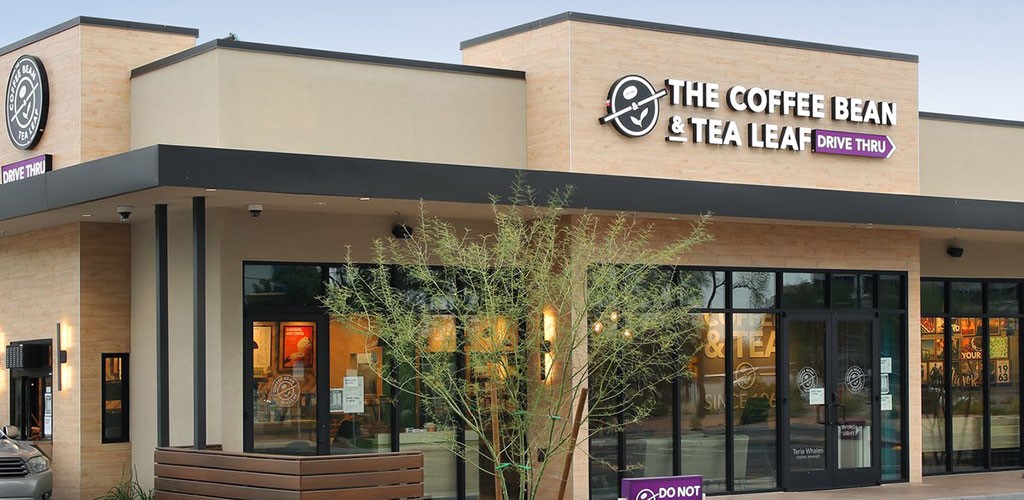

Founded in 1963 by Herbert B. Hyman in Los Angeles, Coffee Bean & Tea Leaf began as a gourmet coffee service for local offices. The first retail store opened in 1968 in Brentwood, California, offering whole-bean coffee, visible roasting, and flavor sampling.
The company is headquartered in Los Angeles, with its global innovation and experience center located in Singapore. It began franchising in 2001, quickly expanding into Asia with dozens of stores in Singapore and Malaysia within the first two years.
Coffee Bean & Tea Leaf sells handcrafted specialty coffee, hand-plucked whole-leaf teas, signature Ice Blended® drinks, single-serve capsules, bakery items, powders, brewing equipment, and branded merchandise. All coffee beans are top 1% Arabica, small-batch roasted in Camarillo, California, and ethically sourced from East Africa, Latin America, and the Pacific.
The brand stands out by pioneering the original Ice Blended® drink in 1987—before the Starbucks Frappuccino. It focuses on quality, innovation, visible roasting experiences, and global impact programs like Caring Cup®. Backed by Jollibee since 2019, it continues to expand worldwide with a strong franchise system.
Here's what you would need to invest if you were to start this franchise. These costs are provided by the franchisor in the Franchise Disclosure Document.
Coffee Bean & Tea Leaf offers 2 types of franchises:
We are summarizing below the main costs associated with opening a Coffee Bean & Tea Leaf Special Distribution Store (Full Service) Franchise.
For more information on the various types of franchises and its costs, refer to the Franchise Disclosure Document (Item 7).
Coffee Bean & Tea Leaf offers 2 types of franchises:
We are summarizing below the main costs associated with opening a Coffee Bean & Tea Leaf Special Distribution Store (Full Service) Franchise.
For more information on the various types of franchises and its costs, refer to the Franchise Disclosure Document (Item 7).
Coffee Bean & Tea Leaf provides an in-depth training program to ensure franchisees operate their stores effectively and in line with the brand's standards. Here are the key components of their training:
The Coffee Bean & Tea Leaf grants its franchisees the right to operate within a specified "Designated Territory," usually centered around the physical premises of the store, such as in a mall or airport terminal.
While this area provides operational space, it does not equate to exclusive territorial rights. Franchisees are not allowed to operate other distribution models like kiosks or carts outside of this designated area without prior consent.
Despite the lack of exclusivity, The Coffee Bean & Tea Leaf commits that it and its affiliates will not establish another store under the same brand within a franchisee’s Designated Territory during the franchise term. However, the company reserves broad rights to compete through various channels—including licensing or franchising others—outside of this specified area.
Below are some of
Coffee Bean & Tea Leaf
key competitors in the
Coffee & Tea
sector.
41
$15,000 to $25,000
$532,000
$1,024,000
n.a.
$0
$xxx,xxx
n.a.
n.a.
n.a.
n.a.

Boba Nation
$200K - $500K
1
$30,000
$350,000
$495,000
n.a.
$0
$xxx,xxx
n.a.
n.a.
n.a.
n.a.

Chatime
$200K - $500K
16
$54,900
$293,000
$480,000
n.a.
$244,000
$xxx,xxx
n.a.
n.a.
n.a.
n.a.

Fuelify is a specialty beverage franchise offering energy teas, milk teas, smoothies, spritzers, coffee and freeze-dried candy, serving boba lovers and on-the-go guests, and known for vibrant flavors, customizable drink combinations and a fun, social “boba hangout” atmosphere.
?
?

Mercato Cucina is a foodservice franchise concept offering Italian-inspired fast-casual meals and marketplace items, serving local residents seeking refined yet convenient cuisine, and known for chef-crafted menus, fresh pastas and sauces, and an Italian deli–style experience with gourmet take-home products.
?
?

Boba Nation is a beverage franchise offering bubble tea, smoothies, and specialty drinks, serving younger consumers and families who enjoy customizable beverages, and known for extensive flavor combinations, vibrant store branding, and scalable formats designed to capture growing boba demand.
?
?

Parlay Cafe is a hybrid café and coworking franchise offering specialty coffee, light bites, and flexible workspace, serving remote professionals, entrepreneurs, and small teams, and known for memberships, meeting rooms, and thoughtfully designed spaces combining café comfort with business amenities.
?
?

Puffles is a dessert-and-beverage franchise offering Hong-Kong-style egg waffles, customizable ice cream treats and bubble tea, serving dessert lovers and social café customers, and known for trendy format, fun social-media appeal and low investment.
?
?

Tea Lounge is a café franchise offering specialty teas, bubble tea, and light café fare in stylish modern settings, serving younger consumers and café-seekers, and known for trendy ambiance, customizable drinks and franchise-ready formula.
?
?
Choosing a franchise goes beyond reviewing fees and financials — it requires an honest assessment of your goals, skills, and risk tolerance. This article outlines the key questions prospective owners should ask before committing. It helps clarify whether the opportunity aligns with your lifestyle, long-term plans, and operational preferences.
Speaking with current and former franchisees is one of the most reliable ways to understand how a franchise really operates. This guide explains how to conduct validation calls, what questions to ask, and how to identify patterns in feedback. It provides a practical framework for uncovering real performance expectations and support quality.
Not all franchise opportunities offer the same potential. This article breaks down how to evaluate a brand’s industry, financial health, support systems, and competitive positioning. It helps prospective buyers compare options and identify franchises with strong long-term viability.
A clear, well-structured business plan is essential for securing financing and preparing for the realities of franchise ownership. This article explains how to build a plan that covers market analysis, operations, staffing, and local marketing. It also outlines how to create realistic pro forma financials, including revenue projections, startup costs, and break-even analysis. Readers gain a practical framework they can use when applying for loans or planning their first years of operations.