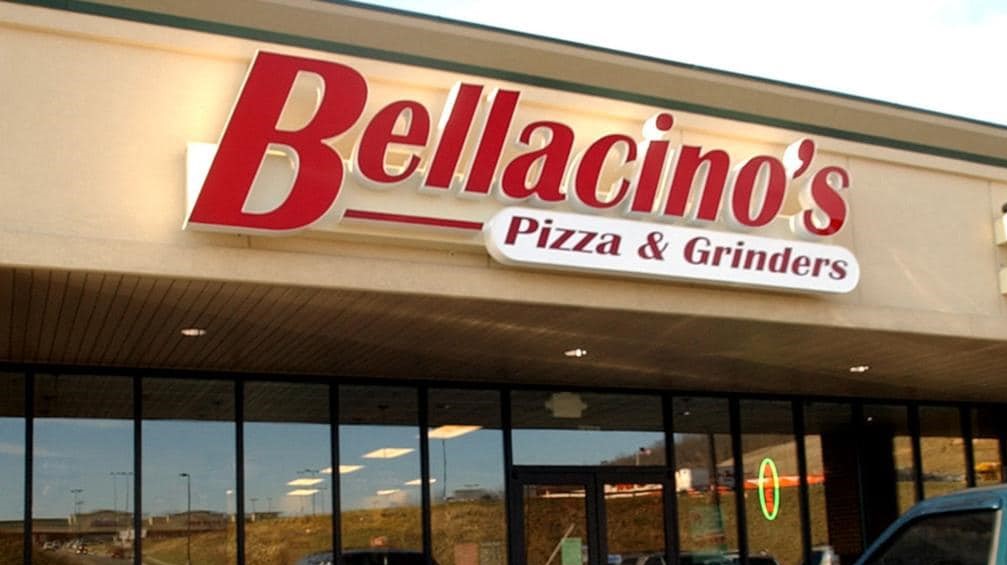
Bellacino's is a fast-casual restaurant franchise offering pizza, grinders, and related menu items, serving families, workers, and students, and known for dough and bread made from scratch daily, oven-baked sandwiches, and a comfortable neighborhood dining experience.
KEY FRANCHISE STATS
Franchisees
?
46
+
-2%
-2%
Franchise fee
?
$35,000
Investment
?
$311,000 - $477,000
Revenue (AUV)
?
Undisclosed
$0
+
n.a.
n.a.
Sign up
Bellacino's Pizza & Grinders is a U.S. fast-casual restaurant franchise known for its fresh-baked bread, grinders, pizzas, salads, and classic Italian dishes. The brand emphasizes handcrafted food and a menu rooted in traditional Italian-American recipes. It has built a loyal following through generous portions and consistently fresh ingredients.
Bellacino’s traces its origins to a family pizza shop whose bread recipe, known as the “Grampa Sam” recipe, dates back to 1959. The modern Bellacino’s concept was founded in 1995, when the first official Bellacino’s Pizza & Grinders restaurant opened. The company is headquartered in Portage, Michigan, where it continues to manage brand growth and national operations.
Bellacino’s began franchising shortly after its first store opened in 1995, expanding its footprint across multiple U.S. states. The franchise offers a menu centered on oven-baked grinders and pizzas, with every location baking its own dough and bread from scratch daily. This focus on freshness is a core part of its brand identity.
Interested in Bellacino's franchise?
Share your information and our team will help you explore Bellacino's franchise opportunity, including startup costs, available territories, ownership requirements, and next steps.
The initial investment required for a Bellacino's franchise is
$311,000 - $477,000.
That is the total cost you would need to finance if you were to start this franchise.
These costs are provided by the franchisor in the Franchise Disclosure Document.
Type of Expenditure
Amount
Initial Franchise Fee for single unit
$35,000 – $35,000
Marketing — store opening
$5,000 – $10,000
Travel and expenses for you and your manager during training
$1,750 – $3,900
Travel for corporate training team
$2,000 – $5,000
Architectural and design services
$6,500 – $10,000
Leasehold improvements
$135,000 – $210,000
Furniture, fixtures and equipment
$90,000 – $145,000
Point of sale / computer system
$3,500 – $5,500
Security deposit / rent
$10,000 – $13,500
Opening inventory and supplies
$10,000 – $16,000
Insurance (construction)
$750 – $2,000
Insurance (business operations)
$3,500 – $7,000
Miscellaneous pre-opening and organization costs
$3,500 – $8,500
Additional funds – three months
$4,500 – $6,000
Total estimated initial investment
$311,000 – $477,400
Create a free account to access this table and more.
Thank you! Your submission has been received!
Oops! Something went wrong while submitting the form.
Type of Expenditure
Amount
Initial Franchise Fee for single unit
$35,000 – $35,000
Marketing — store opening
$5,000 – $10,000
Travel and expenses for you and your manager during training
$1,750 – $3,900
Travel for corporate training team
$2,000 – $5,000
Architectural and design services
$6,500 – $10,000
Leasehold improvements
$135,000 – $210,000
Furniture, fixtures and equipment
$90,000 – $145,000
Point of sale / computer system
$3,500 – $5,500
Security deposit / rent
$10,000 – $13,500
Opening inventory and supplies
$10,000 – $16,000
Insurance (construction)
$750 – $2,000
Insurance (business operations)
$3,500 – $7,000
Miscellaneous pre-opening and organization costs
$3,500 – $8,500
Additional funds – three months
$4,500 – $6,000
Total estimated initial investment
$311,000 – $477,400
Franchise Disclosure Document
Below is Bellacino's's 2025 Franchise Disclosure Document. Sign up for free to view the document.
Number of units
Bellacino's had 46 total units in 2025, of which 46 were franchised-owned and 0 company-owned.
Bellacino’s franchise offers a comprehensive and structured training program to prepare franchisees and their teams for successful restaurant operations. Below is a breakdown of the training programs provided:
Initial Training Program Franchisees and their designated managers must complete all required training programs before the restaurant opens. These sessions are held at times and locations determined by the franchisor, including approved franchise units and the franchisee’s restaurant site. While the training is provided without an additional fee, franchisees are responsible for travel, lodging, and related costs.
Training Curriculum The training includes classroom and on-the-job components delivered by corporate trainers, with topics covering kitchen management, service, sanitation, food safety, portion control, and more. Specific examples include 10 hours of classroom training and 40 hours of on-the-job training for kitchen management, plus pre-opening competency testing and franchise certification evaluation.
Supplemental and Remedial Training Franchisees or their staff may be required to attend additional or remedial training if standards are not met. These sessions can take place at the company’s training facility or franchisee’s location and involve a retraining fee, along with associated travel expenses.
Ongoing Training and Development Franchisees must ensure that staff, including future restaurant managers, attend periodic training and marketing development meetings scheduled by the franchisor. Attendance at no fewer than 75% of these annual sessions is mandatory. The franchisor covers instruction and materials, but the franchisee is responsible for all other expenses.
Territory Protection
Bellacino’s franchise offers its franchisees a protected territory as part of their agreement. This designated territory is defined in the Franchise Agreement, and the franchisor agrees not to open or license another Bellacino’s restaurant within it.
Importantly, the territorial protection is not contingent on sales performance or other operational benchmarks—franchisees retain this protection as long as they comply with the Franchise Agreement.
However, Bellacino’s retains broad rights outside the protected territory. The franchisor can operate or license Bellacino’s restaurants outside the franchisee’s territory, as well as sell proprietary products through other distribution channels such as the internet, mail order, and institutional accounts.




.png)