Poop 911 specializes in pet waste removal services, offering customers convenient and reliable solutions to keep their yards clean and sanitary.
KEY FRANCHISE STATS
Franchisees
?
109
+
47%
47%
Franchise fee
?
n.a.
Investment
?
$4,000 - $26,000
Revenue (AUV)
?
Undisclosed
$0
+
n.a.
n.a.
Sign up
Established in 2005 in Dallas, Texas, Poop 911 is a specialized service provider dedicated to professional pet waste removal. With its franchising journey starting in 2012, the brand has steadily expanded its presence while maintaining headquarters in its founding city.
Poop 911 delivers a full suite of cleanup solutions, serving both residential and commercial properties, as well as events where pet waste management is essential. Its services go beyond simple removal, offering yard deodorizing treatments that contribute to a fresher, more enjoyable outdoor space for pet owners.
What sets Poop 911 apart is its proprietary BARCS system—a streamlined backend platform designed to simplify daily operations for franchisees. This tech-driven approach, paired with robust marketing tools and personalized support, enables franchise owners to build and scale their business with efficiency and confidence.
Interested in Poop 911 franchise?
Share your information and our team will help you explore Poop 911 franchise opportunity, including startup costs, available territories, ownership requirements, and next steps.
The initial investment required for a Poop 911 franchise is
$4,000 - $26,000.
That is the total cost you would need to finance if you were to start this franchise.
These costs are provided by the franchisor in the Franchise Disclosure Document.
Type of Expenditure
Amount
Initial Franchise Fee
None
Rent
$0 to $1,000
Opening Advertising
$100 – $200 / Month
Internet Advertising
$45 / Month
Office Furniture, Computers, GPS, Phone
$0 – $1,000
Liability Insurance
$300 – $525
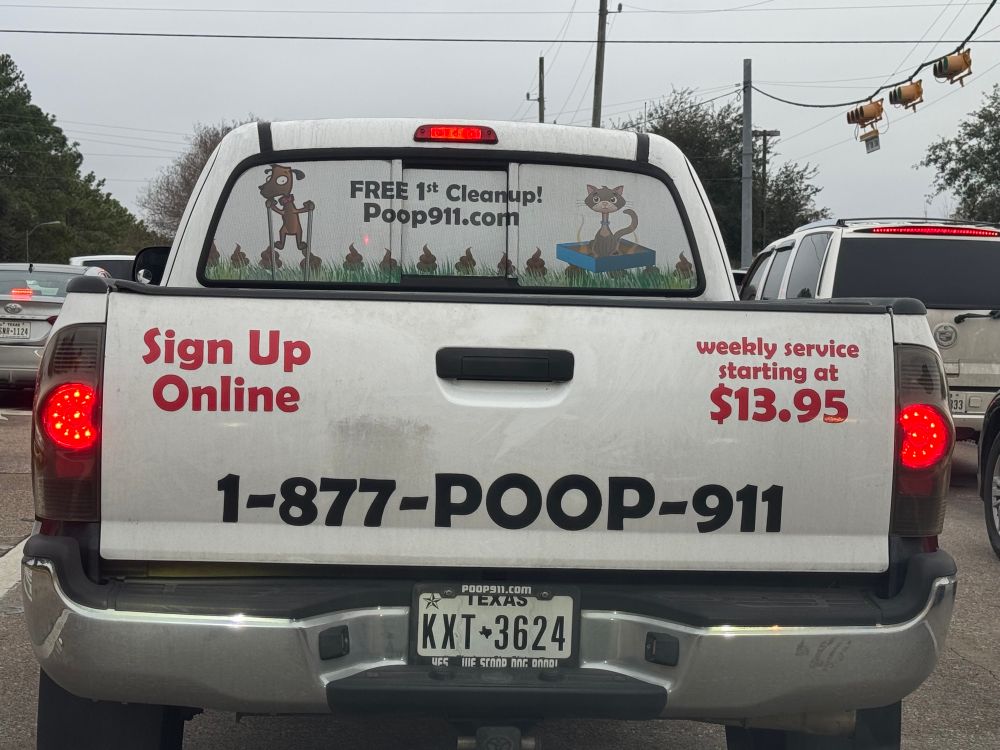
Vehicle Wrap / Advertising / Signage
$1,000 – $2,500
Vehicle (unless already owned)
$0 – $15,000
Training Costs / Travel
$325 – $1,000
Professional Fees
$500 – $2,000
Pet Waste Equipment
$100 – $200
Additional Funds (3 months)
$1,250 – $2,500
Total Estimated Initial Investment
$3,620 – $25,970
Create a free account to access this table and more.
Thank you! Your submission has been received!
Oops! Something went wrong while submitting the form.
Type of Expenditure
Amount
Initial Franchise Fee
None
Rent
$0 to $1,000
Opening Advertising
$100 – $200 / Month
Internet Advertising
$45 / Month
Office Furniture, Computers, GPS, Phone
$0 – $1,000
Liability Insurance
$300 – $525
Vehicle Wrap / Advertising / Signage
$1,000 – $2,500
Vehicle (unless already owned)
$0 – $15,000
Training Costs / Travel
$325 – $1,000
Professional Fees
$500 – $2,000
Pet Waste Equipment
$100 – $200
Additional Funds (3 months)
$1,250 – $2,500
Total Estimated Initial Investment
$3,620 – $25,970
Franchise Disclosure Document
Below is Poop 911's 2023 Franchise Disclosure Document. Sign up for free to view the document.
Number of units
Poop 911 had 111 total units in 2023, of which 109 were franchised-owned and 2 company-owned.
Poop 911 provides a structured and multi-format training program for new franchisees that encompasses both virtual and field components. The Franchisor offers several distinct training modules:
Initial Training Program: This consists of approximately one week of self-managed studies using online and printed materials, followed by one day of in-field training at a franchise location nearest to the franchisee. Training must be completed to the Franchisor's satisfaction.
Virtual Training: Includes classroom sessions on:
Introduction to the brand (1 hour)
BARCS system and customer service (6 hours)
Marketing (4 hours)
Business setup and management (4 hours)
Quality processes (1 hour)
Field Training: Comprises 16 hours of hands-on training in a designated franchise territory, such as Dallas, TX.
Territory Protection
Poop 911 offers territory protection to its franchisees through the grant of an "Exclusive Territory." This exclusivity ensures that no other Poop 911 franchise or company-owned operation will be authorized to provide similar services under the same or different branding within that designated area.
The territory is typically defined by zip codes and is assigned a minimum population threshold, generally set at 250,000.
However, the exclusivity comes with certain conditions. If a franchisee fails to service customers within their area or does not maintain the required number of service vehicles, the Franchisor may reduce the size of the territory.


.png)