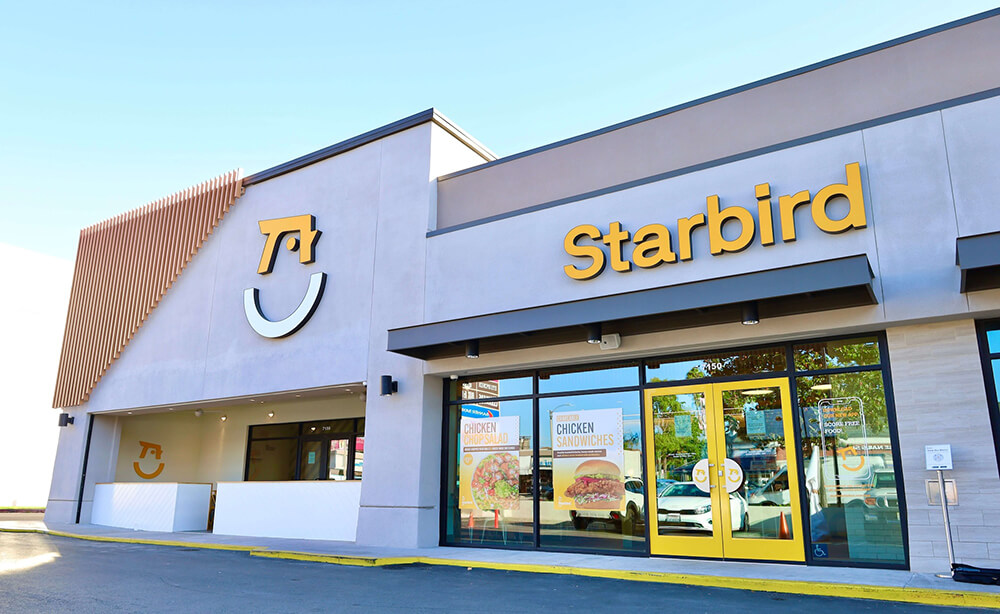
Starbird is a fast-casual chicken restaurant franchise offering crispy chicken sandwiches, tenders, salads, and digital-forward ordering, serving convenience-driven diners, and known for super-premium fast food positioning, tech-driven guest experience, and craveable feel-good chicken focused on quality ingredients.
KEY FRANCHISE STATS
Franchisees
?
0
+
n.a.
n.a.
Franchise fee
?
$40,000
Investment
?
$843,000 - $2,027,000
Revenue (AUV)
?
Undisclosed
$0
+
n.a.
n.a.
Sign up
Starbird is a fast-casual restaurant franchise that serves premium crispy chicken and a range of modern menu items. The brand was founded in 2016 by The Culinary Edge, a well-known food and beverage innovation agency led by Aaron Noveshen.
It launched its first location in Sunnyvale, California, introducing a new approach to fried chicken focused on freshness, flavor, and consistency.
The company is headquartered in the San Francisco Bay Area, where it continues to expand its culinary and operational model.
Starbird later began franchising in 2022. The brand sells hand-breaded, never-frozen chicken made without antibiotics or hormones, featured in sandwiches, salads, tacos, tenders, and sides.
Starbird differentiates itself through its “super-premium fast food” positioning, which blends high-quality ingredients with fast-casual convenience. Its proprietary gluten-free breading, house-made sauces, and chef-driven recipes set it apart from traditional fried-chicken chains.
Interested in Starbird franchise?
Share your information and our team will help you explore Starbird franchise opportunity, including startup costs, available territories, ownership requirements, and next steps.
The initial investment required for a Starbird franchise is
$843,000 - $2,027,000.
That is the total cost you would need to finance if you were to start this franchise.
These costs are provided by the franchisor in the Franchise Disclosure Document.
Type of Expenditure
Amount
Initial Franchise Fee
$40,000 – $40,000
Lease
$24,000 – $71,640
Utility Deposit
$0 – $4,500
Architect Fees
$50,000 – $110,000
Construction & Signage Costs
$235,000 – $1,100,000
Expenses for Initial Training
$25,000 – $29,000
Business Licenses and Permits
$6,000 – $17,000
Business Insurance
$8,000 – $15,000
Initial Inventory and Smallwares
$28,574 – $36,763
Computer Hardware & Software
$45,000 – $65,000
Furniture, Fixtures, & Equipment
$320,000 – $420,000
Grand Opening Marketing
$30,000 – $35,000
Professional Fees
$6,000 – $33,000
Additional Funds (3 months)
$25,000 – $50,000
Total
$842,574 – $2,026,903
Create a free account to access this table and more.
Thank you! Your submission has been received!
Oops! Something went wrong while submitting the form.
Type of Expenditure
Amount
Initial Franchise Fee
$40,000 – $40,000
Lease
$24,000 – $71,640
Utility Deposit
$0 – $4,500
Architect Fees
$50,000 – $110,000
Construction & Signage Costs
$235,000 – $1,100,000
Expenses for Initial Training
$25,000 – $29,000
Business Licenses and Permits
$6,000 – $17,000
Business Insurance
$8,000 – $15,000
Initial Inventory and Smallwares
$28,574 – $36,763
Computer Hardware & Software
$45,000 – $65,000
Furniture, Fixtures, & Equipment
$320,000 – $420,000
Grand Opening Marketing
$30,000 – $35,000
Professional Fees
$6,000 – $33,000
Additional Funds (3 months)
$25,000 – $50,000
Total
$842,574 – $2,026,903
Franchise Disclosure Document
Below is Starbird's 2025 Franchise Disclosure Document. Sign up for free to view the document.
Number of units
Starbird had 13 total units in 2025, of which 0 were franchised-owned and 13 company-owned.
Starbird Chicken offers a detailed and multi-layered training program to prepare franchisees and their management teams for operating a successful restaurant:
Owner’s Training: The General Manager must complete a three-week training program at a certified training store, typically located in the San Francisco metropolitan area. The Operating Partner may also attend this program to ensure alignment with Starbird’s operating standards.
Brand Management Training: The initial General Manager and Assistant Manager are required to attend and complete a brand management training course. This program is designed to ensure they are proficient in maintaining brand consistency and managing staff and operations effectively.
Station-Specific Training Modules: Training includes both classroom and on-the-job instruction across various restaurant stations. Topics include prep, chicken, line, and expeditor stations, with a combination of hours dedicated to theory and hands-on practice.
Supplemental and Web-Based Training: Starbird may require periodic refresher courses, new product launch seminars, and web-based training for employees. These programs ensure ongoing education and adaptation to evolving business needs.
Replacement Staff Training: If the Operating Partner or General Manager leaves, their replacements must be approved and undergo the initial training program. After multiple replacements, a discounted fee is charged for each subsequent trainee.
Territory Protection
Starbird Chicken offers territory protection to its franchisees through a defined “Protected Area” as outlined in the Franchise Agreement. As long as the franchisee remains in compliance with the agreement, the franchisor will not establish or license another Starbird restaurant within this area.
This ensures that franchisees can operate without direct competition from other Starbird locations within their protected boundaries. However, the territory protection is not absolute.
Starbird retains the right to open or franchise restaurants outside of the Protected Area, and also to authorize non-Starbird businesses (even those offering similar products) anywhere, including within the Protected Area. Additionally, the franchisor can operate or allow others to operate off-premises kitchens, ghost kitchens, or virtual brands, provided these do not sell directly from a physical Starbird restaurant inside the Protected Area.



.png)