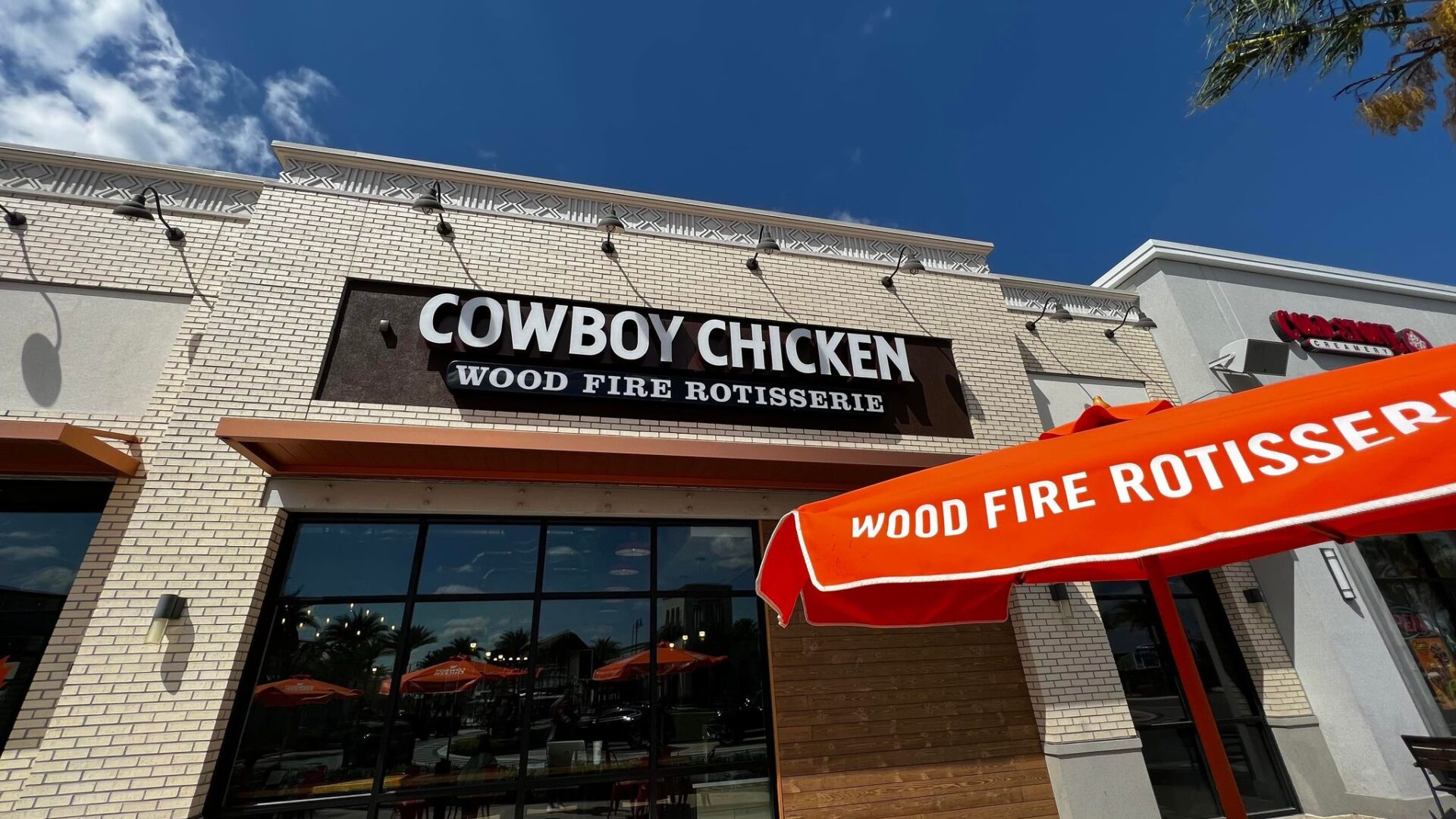
Cowboy Chicken is a fast-casual franchise offering wood-fire rotisserie chicken, hearty sides, and salads, serving families and takeout guests, and known for mesquite flavor, wholesome meals, and a warm, rustic dining atmosphere.
KEY FRANCHISE STATS
Franchisees
?
11
+
10%
10%
Franchise fee
?
$35,000
Investment
?
$582,000 - $1,422,000
Revenue (AUV)
?
Undisclosed
$1,678,000
+
-8.8%
-8.8%
Sign up
Cowboy Chicken is a fast-casual restaurant franchise that specializes in all-natural rotisserie chicken slow-roasted over real wood. The brand was founded in 1981 in Dallas, Texas by Phil and Jeanette Sanders, when they opened their first wood-fired chicken restaurant.
Headquartered in the Dallas/Fort Worth area, the company has evolved from a single location to a growing franchise system.
Cowboy Chicken began franchising its concept in 2007, with its first franchise location opening in 2010 under Cowboy Chicken Franchising, LP. The menu features signature items such as hormone-free chicken roasted over wood, a secret dry-rub seasoning, scratch-made sides like the “Twice-Baked Potaters,” chicken enchiladas, and home-style desserts.
What sets Cowboy Chicken apart in the competitive chicken-franchise market is its commitment to cooking over real wood rather than gas, delivering a bold, smoky flavor and crispy skin that many other chains do not offer.
Interested in Cowboy Chicken franchise?
Share your information and our team will help you explore Cowboy Chicken franchise opportunity, including startup costs, available territories, ownership requirements, and next steps.
The initial investment required for a Cowboy Chicken franchise is
$582,000 - $1,422,000.
That is the total cost you would need to finance if you were to start this franchise.
These costs are provided by the franchisor in the Franchise Disclosure Document.
Type of Expenditure
Amount
Initial Franchise Fee
$35,000
Lease Security Deposits
$0 to $13,000
Grand Opening Promotions Advertising
$25,000 to $50,000
Architectural/Engineering
$7,000 to $16,700
Construction Plan Review
$0 to $3,000
Leasehold Improvements
$210,000 to $680,000
Signs
$8,000 to $31,000
Furniture, Fixtures and Equipment, Freight and Installation
$192,296 to $425,000
Point-of-Sale Equipment, Phone and Sound System (plus installation)
$25,000 to $43,000
Opening Inventory and Smallwares
$21,800 to $29,295
Utility Deposits
$3,200 to $5,000
Training Expenses
$8,000 to $20,000
Insurance Premiums
$3,500 to $5,000
Professional Fees
$3,000 to $6,000
Additional Funds
$40,000 to $60,000
Total for a Single Franchise
$581,796 to $1,421,995
Create a free account to access this table and more.
Thank you! Your submission has been received!
Oops! Something went wrong while submitting the form.
Type of Expenditure
Amount
Initial Franchise Fee
$35,000
Lease Security Deposits
$0 to $13,000
Grand Opening Promotions Advertising
$25,000 to $50,000
Architectural/Engineering
$7,000 to $16,700
Construction Plan Review
$0 to $3,000
Leasehold Improvements
$210,000 to $680,000
Signs
$8,000 to $31,000
Furniture, Fixtures and Equipment, Freight and Installation
$192,296 to $425,000
Point-of-Sale Equipment, Phone and Sound System (plus installation)
$25,000 to $43,000
Opening Inventory and Smallwares
$21,800 to $29,295
Utility Deposits
$3,200 to $5,000
Training Expenses
$8,000 to $20,000
Insurance Premiums
$3,500 to $5,000
Professional Fees
$3,000 to $6,000
Additional Funds
$40,000 to $60,000
Total for a Single Franchise
$581,796 to $1,421,995
Franchise Disclosure Document
Below is Cowboy Chicken's 2024 Franchise Disclosure Document. Sign up for free to view the document.
Number of units
Cowboy Chicken had 18 total units in 2024, of which 11 were franchised-owned and 7 company-owned.
Cowboy Chicken Franchising provides a detailed training and support program to help franchisees launch and operate their stores effectively. Here’s a structured explanation of the training provided by the franchisor:
Initial Training Program Cowboy Chicken offers a comprehensive initial training program for new franchisees and their key management staff. This training covers operational procedures, brand standards, food preparation, customer service, and system usage. It includes classroom instruction as well as hands-on experience and is required before the store opens.
Opening Crew Support As part of their startup assistance, Cowboy Chicken provides an Opening Crew to support franchisees during their store’s launch. This team helps with final training, operational setup, and opening-day readiness, ensuring the franchisee and their staff are fully prepared for actual operations.
Ongoing and Successor Training Beyond the initial phase, the franchisor offers continuing education through seminars, web-based programs, and on-site sessions for new or replacement managers. These programs are designed to keep franchisees updated on operational standards, new product offerings, and system improvements.
Operational Guidance and Updates Franchisees receive ongoing operational support, including updates on menu items, pricing strategies, approved suppliers, and marketing standards. This includes access to Cowboy Chicken’s manuals and regular communications to maintain brand consistency and operational efficiency.
Territory Protection
Cowboy Chicken Franchising offers a limited form of territory protection to its franchisees, primarily through the designation of a “Protected Territory.” Once a location is approved, the franchisor assigns a territory where it agrees not to open another Cowboy Chicken restaurant or license another franchisee to do so.
The size and boundaries of this protected area are determined based on factors such as demographics, geography, and market potential, and are specified in the Franchise Agreement.
However, this protection is not absolute. Franchisees are not shielded from competition that may arise from other sales channels under the Cowboy Chicken brand, such as online or delivery services that may cross geographic boundaries.


.png)